Instruments Sheetly Supports: All 25, and What Each One Gets
Wondering whether Sheetly supports your instrument? In this guide, we list all 25 instruments in six families, explain what supported means for each, and show which clef your part is likely to be written in.

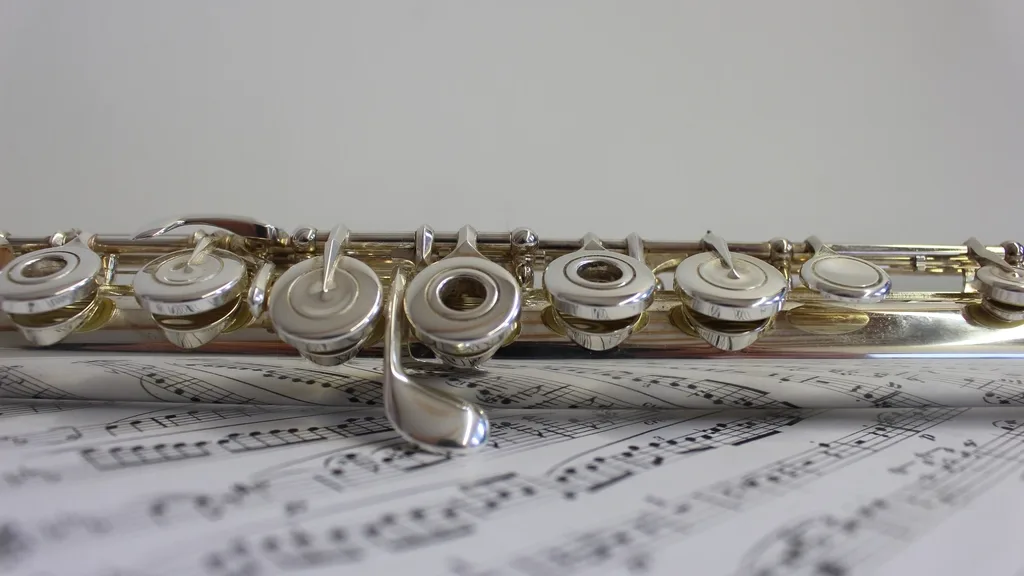
You play the euphonium in a community band, or the ukulele at home, or you sing alto in a church choir, and before you download a music app you want to know one thing: does it work for my instrument? It is a fair question, because many music apps are really piano apps or guitar apps underneath.
Sheetly supports 25 instruments in six families. You pick yours when you set up the app. From then on, Sheetly plays your music in that instrument's sound, and the built-in coach answers in your instrument's terms. You can also switch any score to the sound of any other instrument on the list.
In this guide we list all 25, explain what "supported" means in practice, and show you which clef your part is most likely written in, with a picture for each idea.
The 25 instruments, in six families
| Family | Instruments |
|---|---|
| Keys (3) | Piano, Keyboard, Organ |
| Guitar and bass (4) | Acoustic guitar, Electric guitar, Bass, Ukulele |
| Strings (4) | Violin, Viola, Cello, Harp |
| Woodwinds (5) | Flute, Clarinet, Saxophone, Oboe, Recorder |
| Brass (6) | Trumpet, Trombone, French horn, Tuba, Euphonium, Baritone horn |
| Voice and percussion (3) | Voice, Drums, Percussion |
If your instrument is not on the list, choose Something else when you set up Sheetly. Any part in standard notation can still be scanned and played in the closest sound, and you can tell us what you play at hello@trysheetly.com.
What "supported" means
Your music plays in your instrument's sound
Any score can play back as any instrument on the list, or on a drum kit. That is more useful than it sounds. A flute part can be heard on a clarinet, a trombone part can be checked on the piano, and a choir line can be played on the organ, where long notes hold and you can hear exactly where the harmony moves. Switching the sound is also a good way to hear a rhythm clearly: a plucked or percussive sound makes every note's start obvious.
The coach answers in your instrument's terms
Sheetly's coach has read the notes of the page you scanned, and it knows what you play. For many instruments it can tell you exactly how to play each note, worked out from the notes on the page rather than guessed:
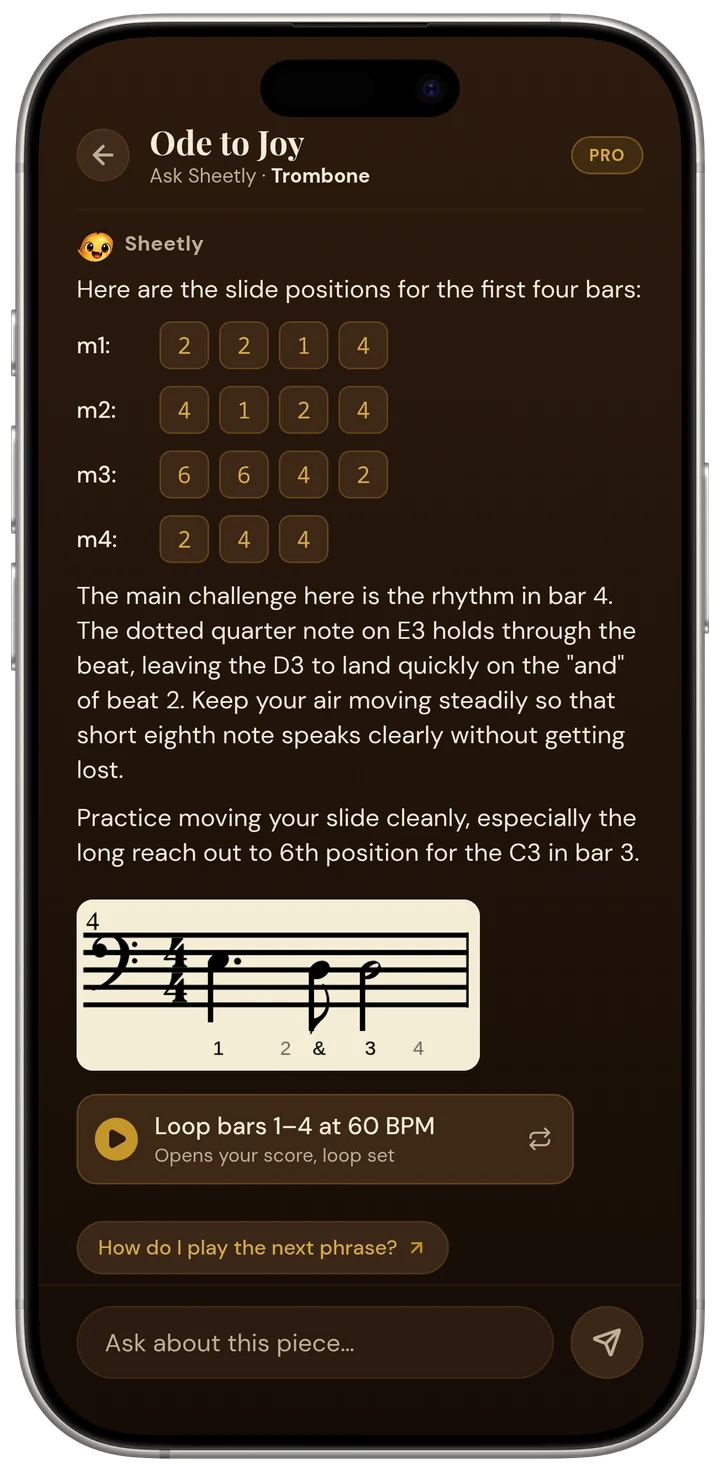
- Trombone: the slide position for each note.
- Trumpet, euphonium and tuba: which valves to press.
- Guitar, bass and ukulele: the string and fret.
- Violin, viola and cello: the string and finger in first position.
For keys, woodwinds, French horn, harp and voice, the coach answers questions about the notes and suggests a common fingering where there is one.
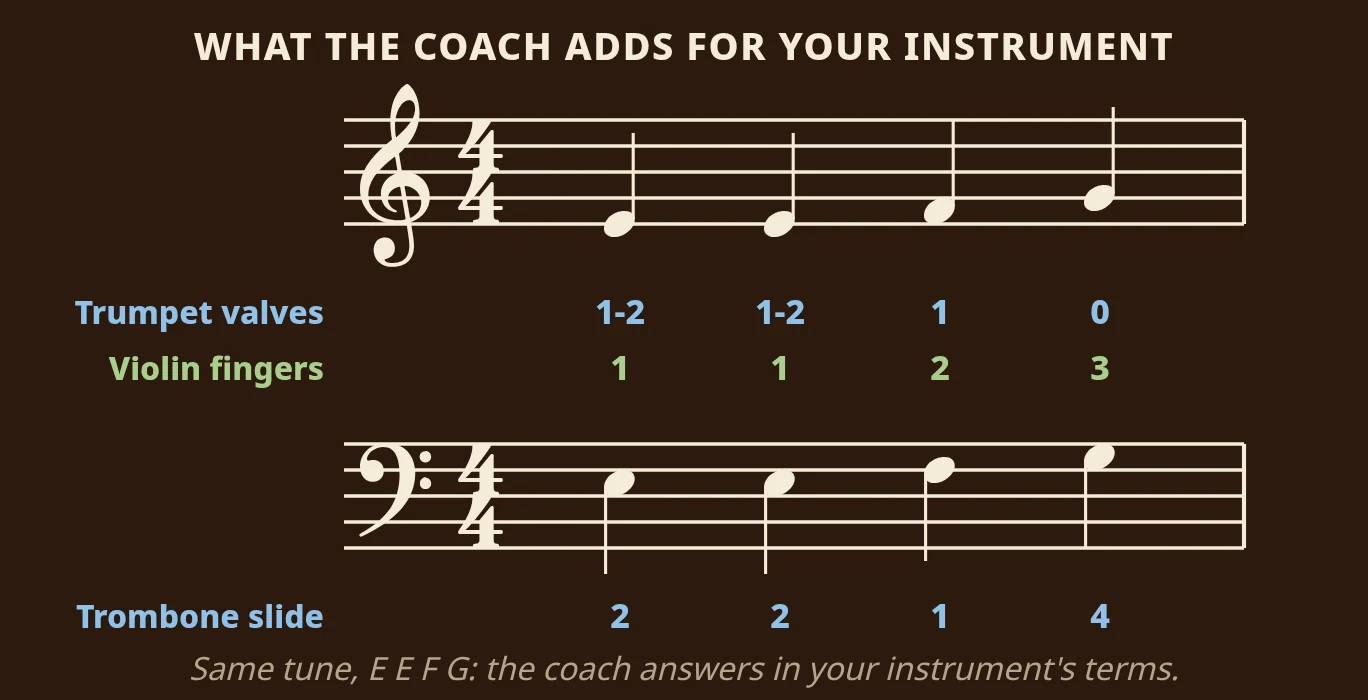
Here is the same opening of Ode to Joy (E, E, F, G) as three different players would think of it. A trumpet player presses valves 1 and 2 for E, valve 1 for F and no valves for G. A violinist plays it on the D string with fingers 1, 1, 2 and 3. A trombonist reading the bass clef version plays slide positions 2, 2, 1 and 4. Same tune, three different instructions, and the coach gives you yours.
Which clef is your part written in?
Before you scan a part, it helps to know what you are looking at. Every instrument reads one main clef, and a few switch between two. The clef is the symbol at the start of each staff that tells you which note each line and space stands for.
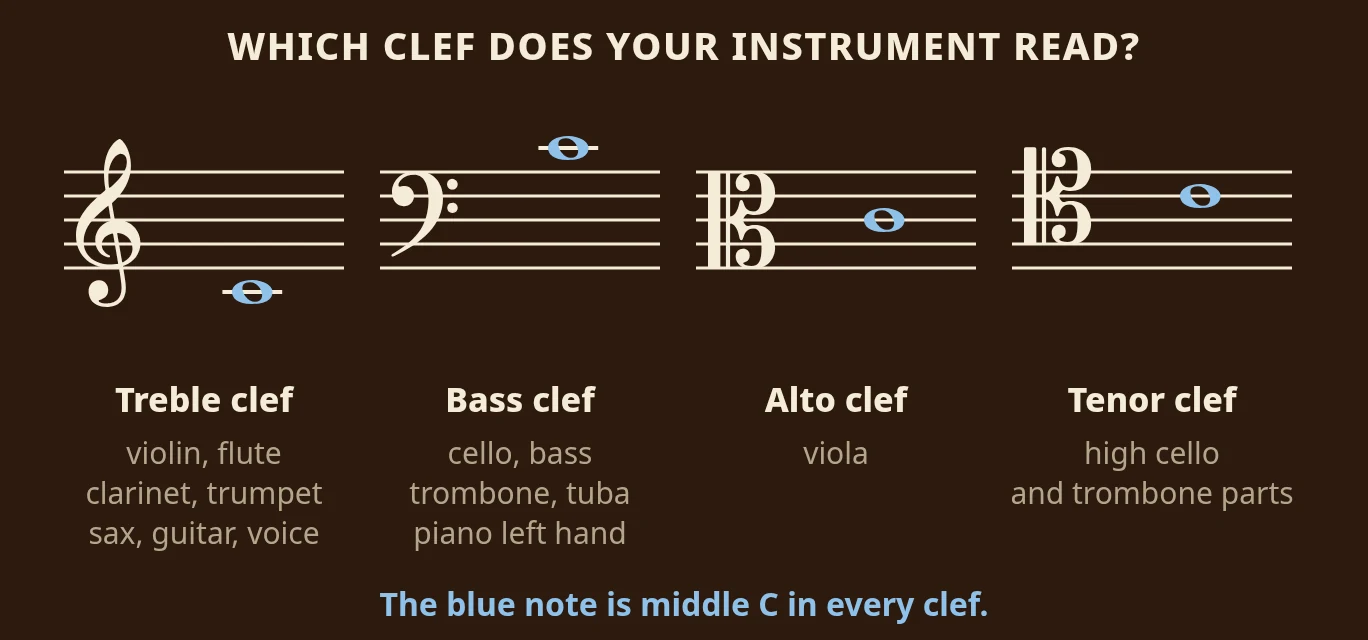
- Treble clef is for higher instruments: violin, flute, oboe, clarinet, saxophone, trumpet, French horn, recorder, guitar, ukulele and most singers, plus the piano's right hand.
- Bass clef is for lower instruments: cello, bass, trombone, euphonium, baritone horn and tuba, plus the piano's left hand and bass singers.
- Alto clef is the viola's home clef. It puts middle C on the middle line.
- Tenor clef appears in high cello, trombone and bassoon passages. It puts middle C on the fourth line.
Notice how middle C moves. In the treble clef it sits on a ledger line below the staff, in the bass clef on a ledger line above, and in the two C clefs on a line inside the staff. The C clef's shape points right at it.
Some instruments also read in a different key from the piano. A B-flat trumpet or clarinet part is written a step higher than it sounds, for example. If that is new to you, read our guide to transposing instruments.
Scan any part in standard notation
Sheetly reads standard printed notation, so a part for any of these instruments can be scanned: single-line parts in treble, bass, alto or tenor clef, and piano music on two staves. Guitar tab and chord diagrams are not read. The marks Sheetly reads are listed on the supported symbols page.
To get started, take a photo of a printed page with your iPhone or iPad. Sheetly plays it back with a playhead that follows the notes, in your instrument's sound. Slow it down, loop a bar, record a take and hear yourself back, or ask the coach how to play the bar you are stuck on.
Each instrument has its own guide, too: piano, violin and other strings, guitar and choir. For brass, see the story of a crumpled trombone part.
Questions
My instrument is not on the list. Can I still use Sheetly?
Yes. Choose Something else when you set up Sheetly. Any part in standard notation can still be scanned and played in the closest sound, and you can tell us what you play at hello@trysheetly.com.
Can I hear my part on a different instrument?
Yes. Any score can play back as any of the 25 instruments, or on a drum kit, without scanning it again.
Does Sheetly give fingerings for every instrument?
For trombone the coach gives slide positions, for trumpet, euphonium and tuba it gives valves, for guitar, bass and ukulele it gives string and fret, and for violin, viola and cello it gives string and finger in first position. For the other instruments it answers about the notes and suggests a common fingering where there is one.
Does Sheetly read guitar tab?
No. Sheetly reads standard notation on the five-line staff, so guitar tab and chord diagrams are not read. A guitar part written in standard notation scans and plays like any other.