Hear Your Part on a Different Instrument: Why a Trombonist Should Listen on Clarinet
Ever practised a bass line that sounds like nothing on its own? In this guide, we show you four ways that hearing your part on a different instrument helps you practise, and exactly how to use each one.

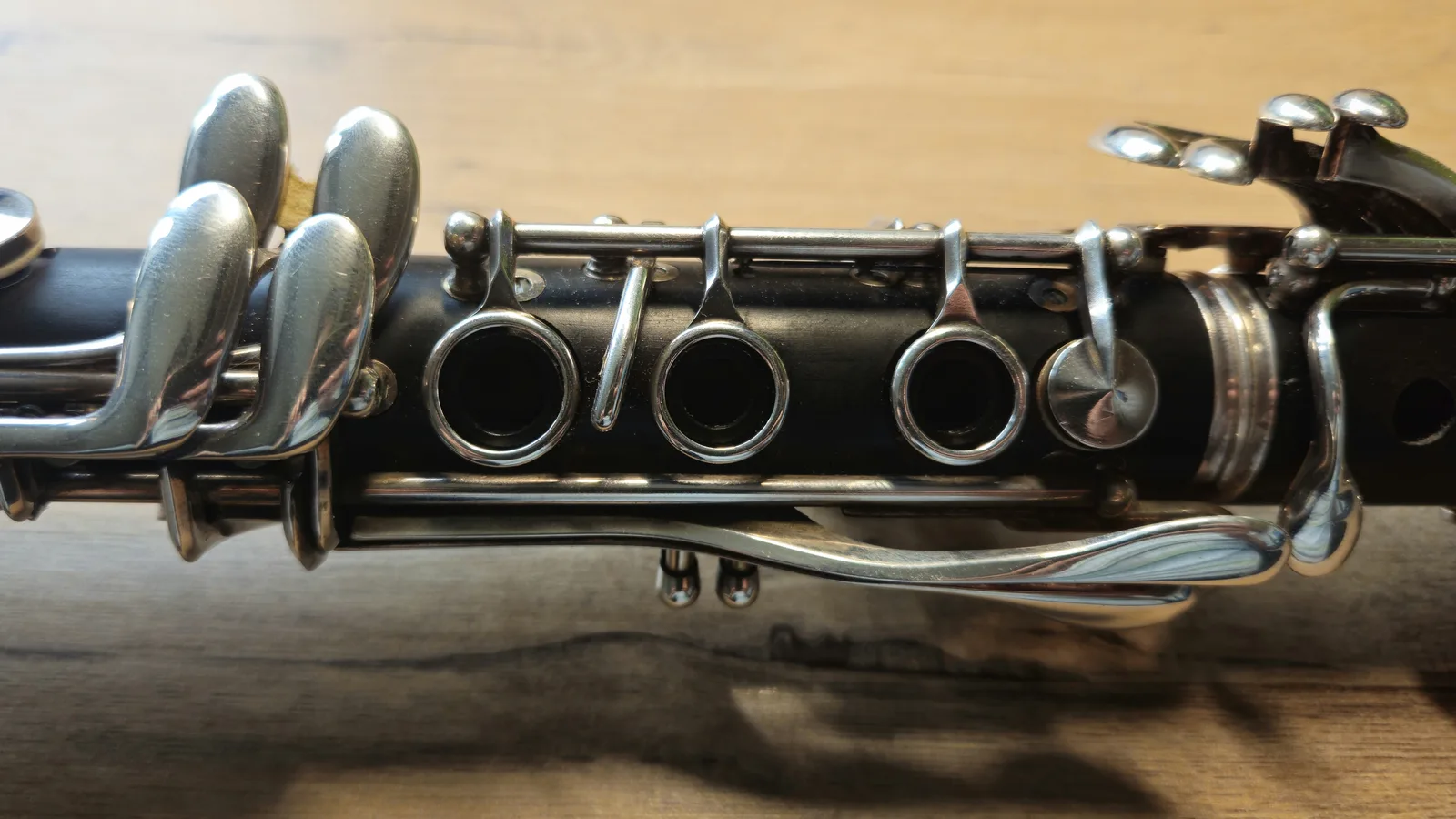
If you play trombone, tuba, bassoon, cello or bass, you know the feeling. You practise your part at home, and on its own it sounds like a string of low notes with no tune. In rehearsal it suddenly makes sense, because the melody is sitting on top of it. One of the simplest ways to make your part make sense at home is to hear your part on a different instrument.
That might sound like a toy, but it is a real practice tool. Changing the sound of your part does not change a single note. It changes how you hear those notes: which steps and leaps jump out, where the phrase is going, and exactly where each note starts and stops. It is a little like changing the lighting in a room to see the shape of something more clearly.
In this guide, we show you four ways to use a different instrument when you practise, with a picture for each one and a short routine you can try today. We will use a trombone part as the example, but the same ideas work for any instrument.
Why the sound of your part matters
Low instruments live at the bottom of the music. Played back as a trombone, especially through a phone speaker, a bass clef part can sound like a warm blur: the pitches are there, but the steps between them are hard to pick out. A brighter, clearer sound, like a clarinet, a flute or a violin, makes every step and leap obvious. You are not changing the music. You are making it easier to hear.
How to use a different instrument in your practice
1. Hear the shape of a bass line
Most bass lines are built from a few important notes of each chord. The most important is the root, the note the chord is named after. The next is the fifth, the note five letter names above the root: for a C chord, count C, D, E, F, G, and G is the fifth.
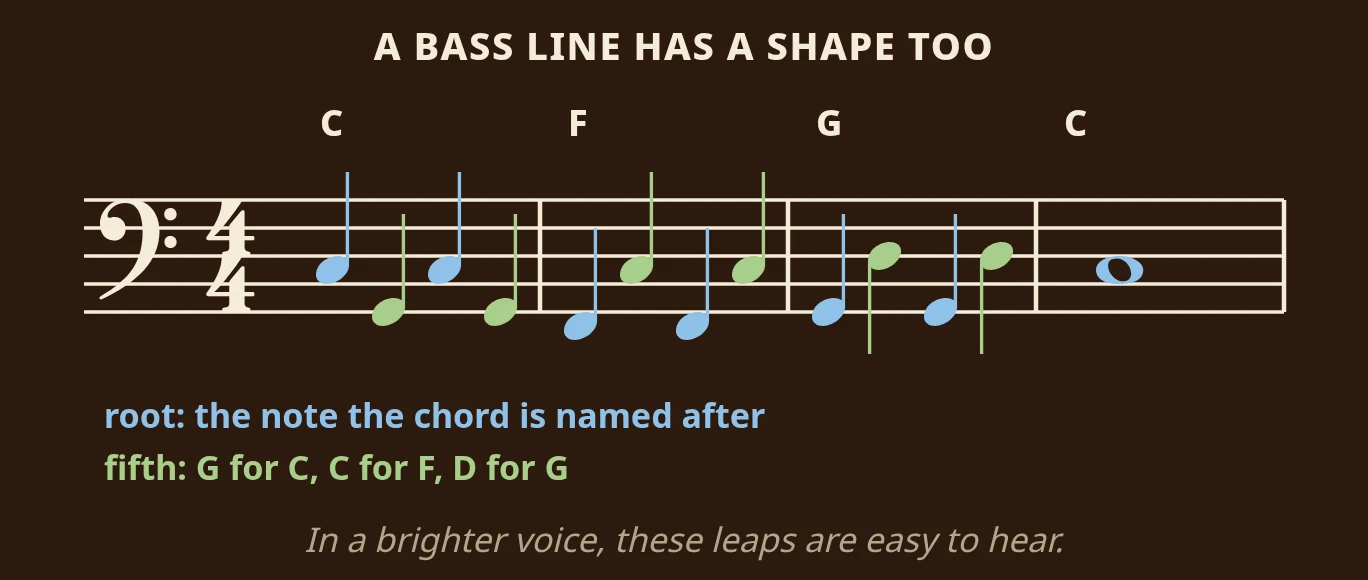
In the line above, the player jumps between root and fifth in every bar: C and G under a C chord, F and C under an F chord, G and D under a G chord. On paper that looks like a pattern. On a low, soft sound it can sound like a pattern too, just a lot of thumping. Play it back on clarinet and you hear the line move: down a fourth, up a fourth, then a step down to F, a jump up to C, and so on.
Try this routine:
- Listen to your part twice on a bright instrument while you follow the music with your finger.
- Hum or sing the line along with the playback. You do not need a good voice. You just need to follow the ups and downs.
- Switch back to your own instrument's sound and play along. You will find the leaps land more confidently, because you already know what they sound like.
2. Find the tune in your part
Bar after bar of roots and fifths can feel like a job rather than music. Played back on violin or clarinet, the same bars often turn into a little melody of their own, with a high point, a low point and a direction. Once you can hear your part as a line, you start to play it like one: you shape the phrase, lean towards the high note and let the end of the phrase relax.
Listen for the highest note in each phrase and mark it on your music with a small pencil arrow. That is usually where the phrase is heading, and it is a good place to grow a little louder.
3. Keep the fifteenth repetition interesting
Looping a few bars fifteen times is exactly the right thing to do when you are learning a hard passage, and it is also tedious. After a while your ear stops listening and your hands play on autopilot. Changing the sound halfway through is an easy way to make your ear pay attention again.
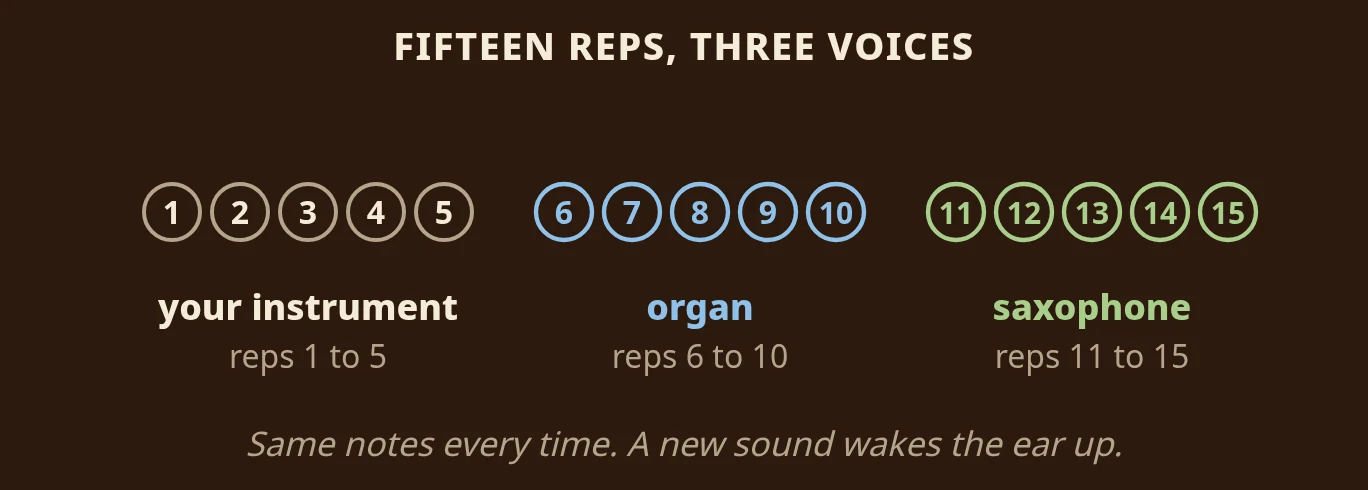
Play repetitions one to five with your own instrument's sound, six to ten on organ, and eleven to fifteen on saxophone. The notes are identical every time, but your brain hears something new, so it stays awake. Our guide to looping one bar explains how to choose the bars and how many clean repetitions to aim for.
4. Hear exactly where each note ends
Every note has a start and an end, and the end matters just as much. A half note lasts two full beats, and a quarter note followed by a rest should stop exactly when the rest begins. Many players start notes on time but let go of them early or late.
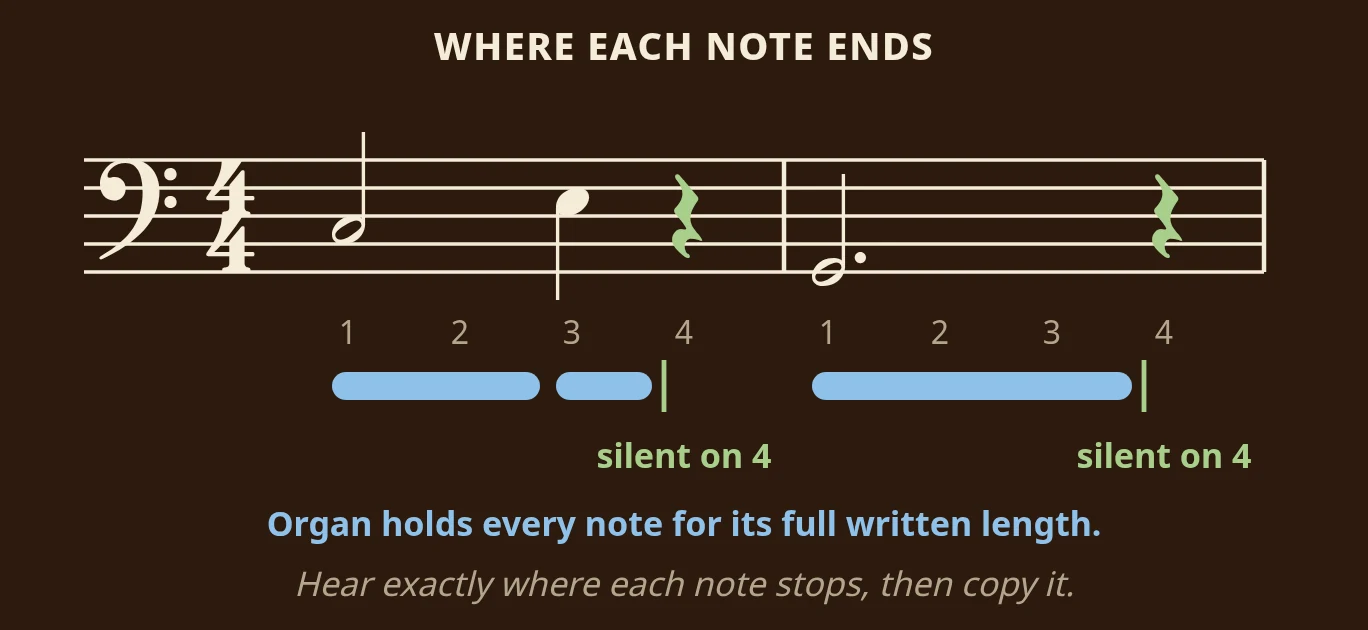
An organ is perfect for this. It holds every note at full strength for its whole written length, then stops. There is no fading away, so you can hear exactly when each note is supposed to end. If a passage is mostly long notes, like a chorale, play it back on organ and listen to where the silences fall. Then play along on your own instrument and match them.
Hear your part on a different instrument in Sheetly
Take a photo of your printed part with your iPhone or iPad, and Sheetly plays it back with a playhead that follows the notes. Tap the instrument name in the bottom bar of the player and a sheet slides up called Playback instrument. The instruments are grouped by family: keys, guitar and bass, strings, woodwinds, brass, then voice and a drum kit. Pick one, tap Done, and the same notes come out in a different voice.
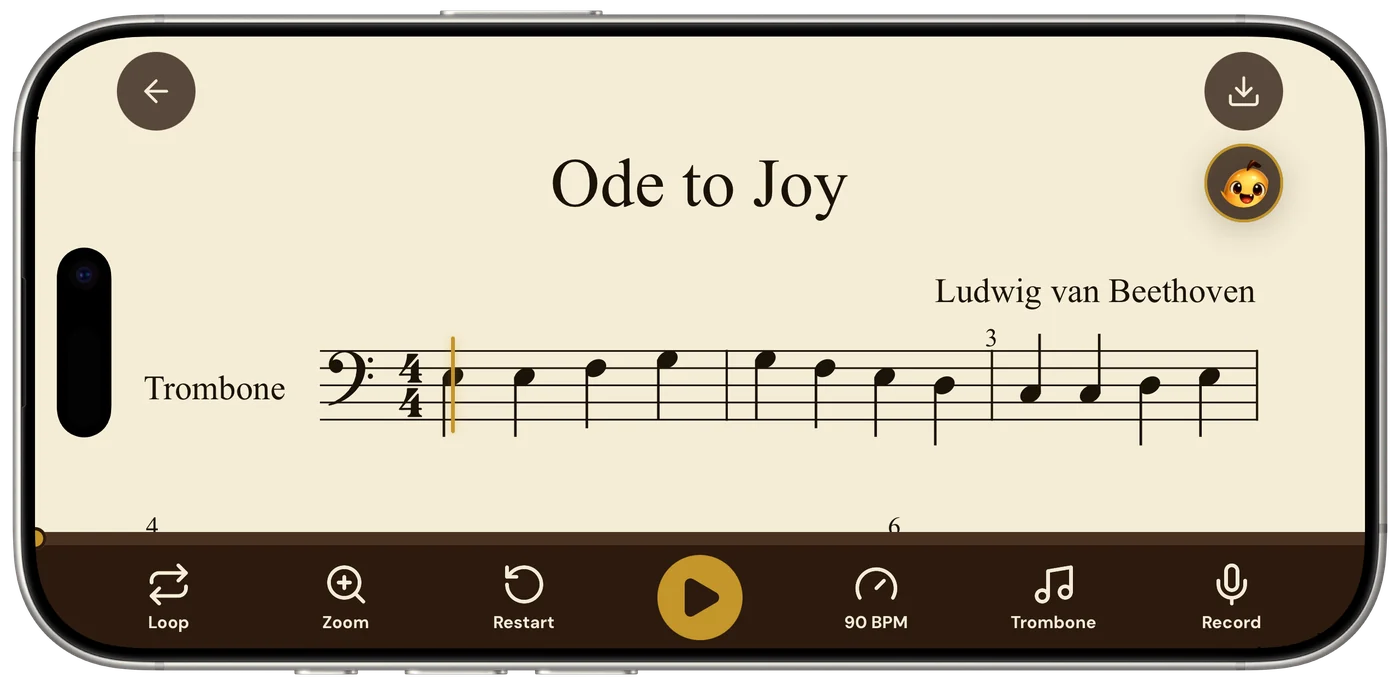
Each score in your Library is labelled with its instrument, such as trombone or ukulele. The playback instrument is a separate choice: it is just the voice the player uses right now, and you can change it as often as you like without touching the score itself.
Questions
Which playback instruments does Sheetly have?
Keys, guitars, strings, woodwinds, brass and voice, from piano and organ to flute, trumpet and tuba, plus a drum kit. Tap the instrument name in the player's bottom bar and pick from the sheet.
Does switching instruments change the notes?
No. Same notes, different voice. Moving a part into a different key for a transposing instrument is a different job, explained in our guide to transposing instruments.
Why would a trombonist listen on a clarinet?
Because bass line players rarely get to hear their line as a tune. In a brighter sound, the steps and leaps are easy to hear, and phrasing you cannot hear at the bottom of the band becomes obvious.
Which sound is best for long notes?
Organ. It holds each note at full strength for its whole written length and then stops, so you can hear exactly where every note ends and every rest begins.