How to Learn a Piece When You Don't Know How It Should Sound
Wondering how to learn a piece you have never heard? In this guide, we share four ways to find out how it should sound before you practice, and five simple steps that take you from the first listen to reading it on your own.

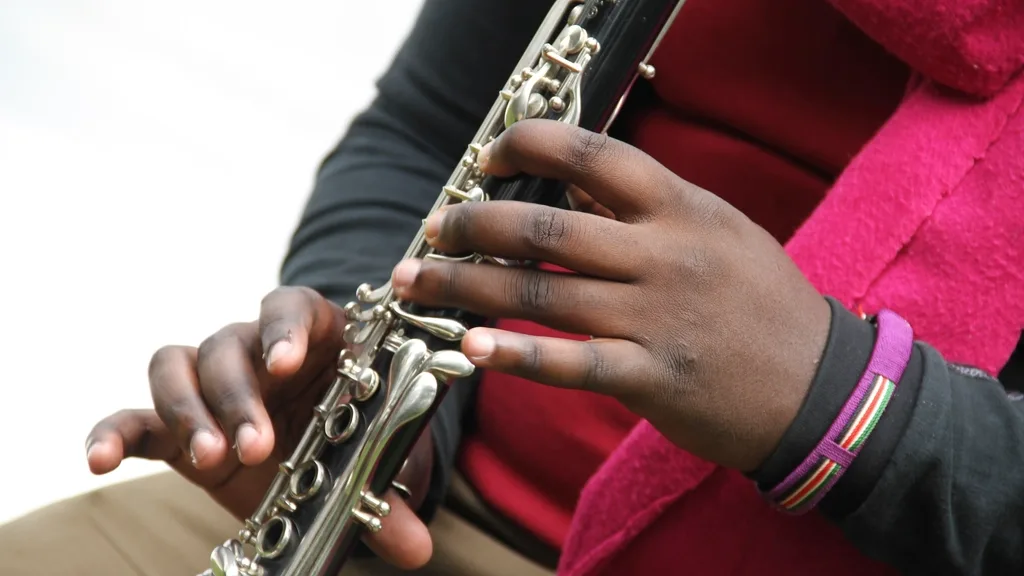
Have you ever been handed a new piece, a band part, an audition etude or a song for your lesson, and realized you have no idea how it is supposed to sound? You can read the notes one by one, but you cannot hear the tune in your head, so you are never quite sure whether what you are playing is right.
That uncertainty matters more than it seems. Your fingers learn whatever they repeat. If you practice a dotted rhythm as two even notes all week, that is what you will play at rehearsal, and unlearning it takes longer than learning it correctly would have. Knowing how a piece should sound before you practice it is not cheating. It makes every repetition count.
In this guide, we share how to learn a piece you have never heard: four ways to find out how it should sound, and a five-step method that takes you from the first listen to reading it confidently on your own. Each step has a picture, and the method works whether you take lessons or teach yourself.
Four ways to hear how it should sound
Before you start practicing, find a way to hear the piece, or at least the hardest parts of it. Here are four options, from easiest to most work.
1. Look for a recording
Search for the title together with the composer's or arranger's name. Publishers often post full recordings of band and orchestra pieces, and teachers often share recordings of common audition etudes. Recordings exist more often than you might think.
There are two catches. In a full band or orchestra recording, your part can be buried under everyone else's, so you hear the piece but not your own line. And the tempo or edition may not match yours, so a bar that sounds different might be a different version, not your mistake.
2. Ask someone to play it
Your teacher, band director or section leader can play the hard bars for you in a minute. Record them on your phone so you can listen again at home. This is especially useful for a tricky rhythm, because you get to hear it on your own instrument.
3. Work it out yourself
Count the rhythm out loud without the pitches first. Then find the notes slowly on your instrument and sing or hum the line back. It is slow, but it is also the best reading practice there is. Use it a few bars at a time, especially for short passages.
4. Scan the page with an app
A sheet music scanner app reads the printed notes from a photo and plays them back. Sheetly (that is us) does this on iPhone and iPad, and there are other apps too. The big advantage is that you hear exactly your part, not the whole band, at any tempo you like. That matters most for school band parts, local arrangements and photocopied etudes that have no recording at all.
If you play a transposing instrument such as the B flat clarinet, trumpet, alto saxophone or horn in F, your written notes do not match the same notes on a piano. Our guide to transposing instruments explains which way to adjust.
Five steps from first listen to reading it yourself
Once you can hear the piece, use the sound as a guide, not a crutch. These five steps keep you reading the page the whole way through.
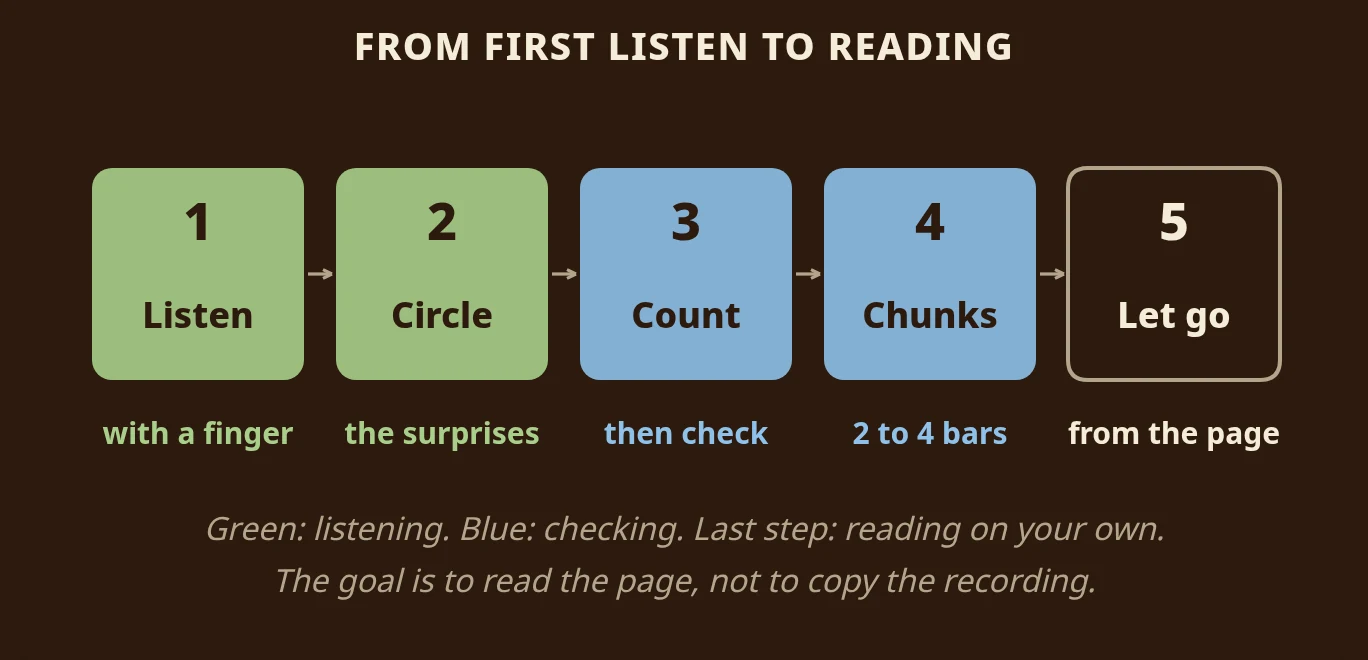
Step 1: Listen once with the music
Play the whole piece, or just the hardest page, and follow along with a finger on the notes, without playing. Your eyes connect the sound to the symbols. Do not worry about remembering everything. You are just getting a map of the piece.
Step 2: Circle the surprises
Mark every bar that surprised you: a rhythm that sounded different from what you expected, a big jump, an accidental, a sudden change in dynamics. Use a pencil. These circled bars are where your practice time should go.
Step 3: Count, then check
Take each circled bar on its own. Count it out loud first, without listening. Then listen to just that bar, slowly, and compare. Repeat until what you count matches what you hear. If a rhythm still does not make sense, our guides to dotted notes and ties and sixteenth notes cover the patterns that confuse people most.
Step 4: Play in small chunks
Now pick up your instrument. Play two to four bars at a time, slowly, and check each chunk against the sound before you join it to the next one.
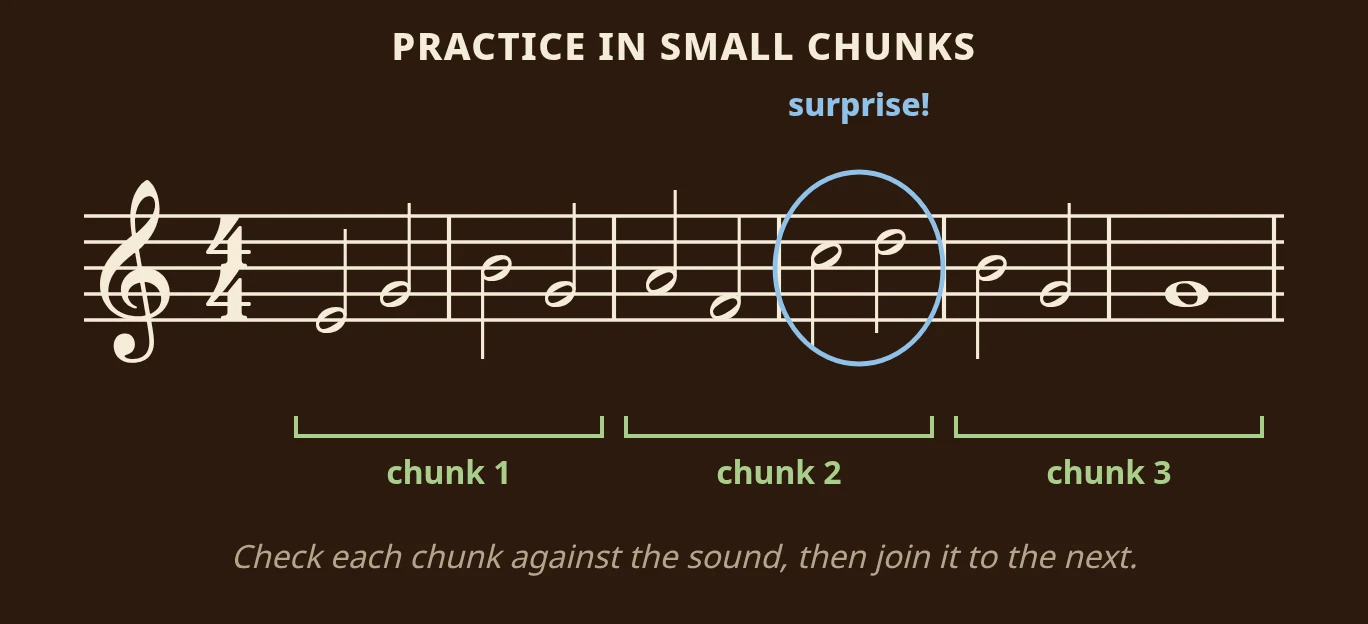
Small chunks keep mistakes from sneaking in. If a chunk keeps going wrong, make it smaller, even a single bar, and slow it down further. When the chunk is right three times in a row, join it to the next.
Step 5: Let go of the recording
Once a chunk is right, play it from the page without listening first. This step is the most important one. The goal is to read the music, not to copy what you heard. If you always listen before you play, you end up playing by ear, and you will be lost the moment the recording is not there.
A sample first week with a new piece
Here is how the five steps might fit into a week of short practice sessions. Adjust it to the length of your piece and the time you have.
- Day 1: listen once with the music, following with your finger, and circle the surprises.
- Days 2 and 3: count each circled bar out loud, then check it against the sound. Clap the rhythms before you play them.
- Days 4 to 6: play in chunks of two to four bars, slowly, starting with the circled bars. Join chunks together as they become reliable.
- Day 7: play the whole piece from the page without listening first. Notice which bars still wobble, and make those next week's chunks.
Fifteen to twenty minutes a day on this plan usually does more than one long session at the weekend, because your fingers get a fresh, correct reminder every day.
Common mistakes when learning a new piece
- Practicing before you know how it goes. A week of repeating a wrong rhythm is a week you have to undo.
- Always starting from the beginning. The first page gets polished and the hard page never does. Start with the circled bars.
- Practicing at full speed too soon. Slow and right beats fast and wrong. Our guide on slowing it down and walking it back up shows how to raise the tempo safely.
- Copying the recording instead of reading. Use the sound to check, then play from the page.
Hear your own part at any tempo
The hardest pieces to learn are the ones nobody has recorded: a band part arranged by your director, a photocopied etude, a song in a local choir book. That is exactly what Sheetly is for.
Take a photo of the page with your iPhone or iPad, and Sheetly plays your part back in your instrument's sound, with a playhead that follows the notes. Loop the bar you circled, slow it down as far as you need, and walk the tempo back up as it gets easier. You can record a take and hear yourself back against the score, and if a bar puzzles you, ask the built-in coach about it. It has read the notes on your page, so a question about bar 12 gets an answer about your bar 12.
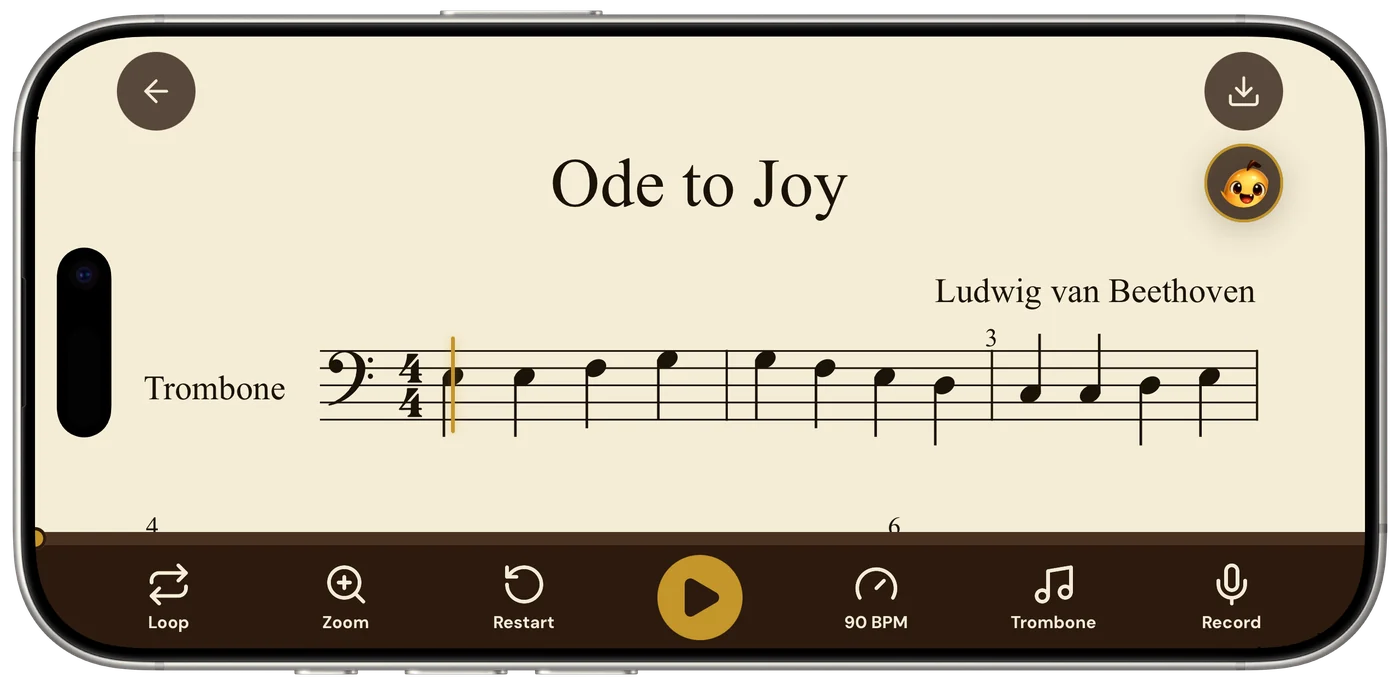
Sheetly plays what is printed, at a steady tempo, so it is perfect for notes and rhythm. For style, phrasing and the little tempo changes that make music breathe, listen to your teacher or a good recording too.
Questions
Is it bad to learn music by ear from a recording?
Learning from a recording is fine as long as you also read the page: listen to check, then play from the music. Problems start when the recording replaces the page, because you copy the performer's tempo and mistakes, and your reading does not improve.
What is an etude?
An etude is a short piece written to practice one technique, such as a scale pattern or a tricky rhythm. Auditions often set one as a required piece.
How do I learn a piece with no recording?
Ask your teacher or director to play the hard bars, work out short passages yourself by counting and singing, or photograph the page with an app like Sheetly that plays it back at any tempo.
Should I listen to the piece before sight-reading it?
Not for sight-reading practice: there, listen after you read. When you are learning a piece to perform, hearing it first is a good idea, because it stops you practicing mistakes.