How to Improve Sight Reading Skills: A 10-Minute Daily Routine
Wondering how to get better at sight-reading? In this guide, we share why easy music works best, what to check before you play, a simple ten-minute routine you can do every day, and the habits that hold most readers back.

Have you ever been handed a new piece in a lesson, a rehearsal or an audition and felt your mind go blank? Maybe you can play your pieces well once you have learned them, but reading something for the first time still feels like stumbling through fog. That is one of the most common worries in music, and the good news is that sight-reading improves quickly with the right kind of practice.
Sight-reading means playing or singing a piece from the page the first time you see it. It is not a talent some people are born with. It is mostly pattern recognition: fluent readers have seen so many rising scales, common rhythms and familiar jumps that they recognize the shapes and play them, instead of working out every note one at a time.
In this guide, we share how to get better at sight-reading with a short daily routine. We cover why easy music works best, the six things to check before you play, a ten-minute routine, and the mistakes that slow most readers down. Whether you take lessons or teach yourself, you can start today.
Why easy music makes you a better reader
The fastest way to build a library of musical shapes is to see thousands of them. And the fastest way to see thousands of shapes is to read lots of music that is easy enough to get through without stopping.
That is the first secret of sight-reading: volume beats difficulty. Choose music a level or two easier than the pieces you are working on. Ten minutes of new, easy music every day does far more than an hour of hard music once a week.
Why you should never stop
The second secret is just as important: keep going. Teachers, band directors and audition judges all prefer a steady beat with a few wrong notes over perfect notes with gaps between them. Every time you stop to fix something in practice, you are training yourself to stop. If you miss a note, skip it and catch the next beat.
Why your eyes should be ahead of your hands
Good readers look a beat or two ahead of what they are playing. While their fingers play one note, their eyes are already taking in the next few, so nothing comes as a surprise.
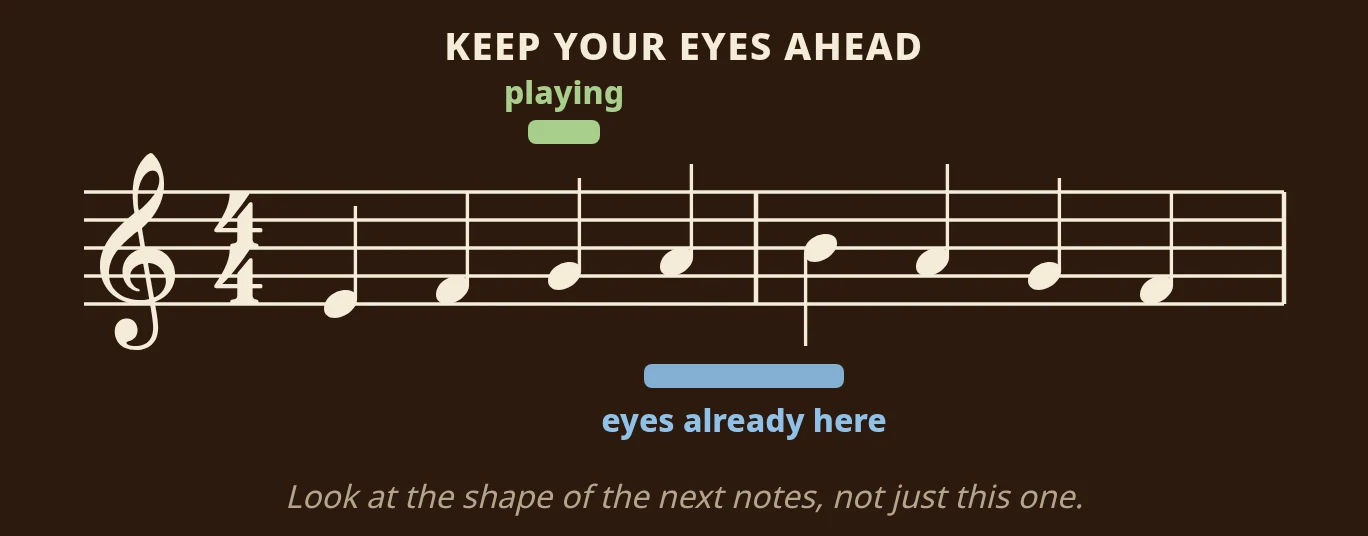
This takes practice, but it starts with easy music. When the notes you are playing are comfortable, your eyes are free to look ahead. Pianists especially should try not to look down at their hands: every glance at the keys costs you your place on the page.
What to check before you play
Lessons and auditions usually give you a short look at the music before you start, often around thirty seconds. That time is valuable. Use it to check these six things, in this order:
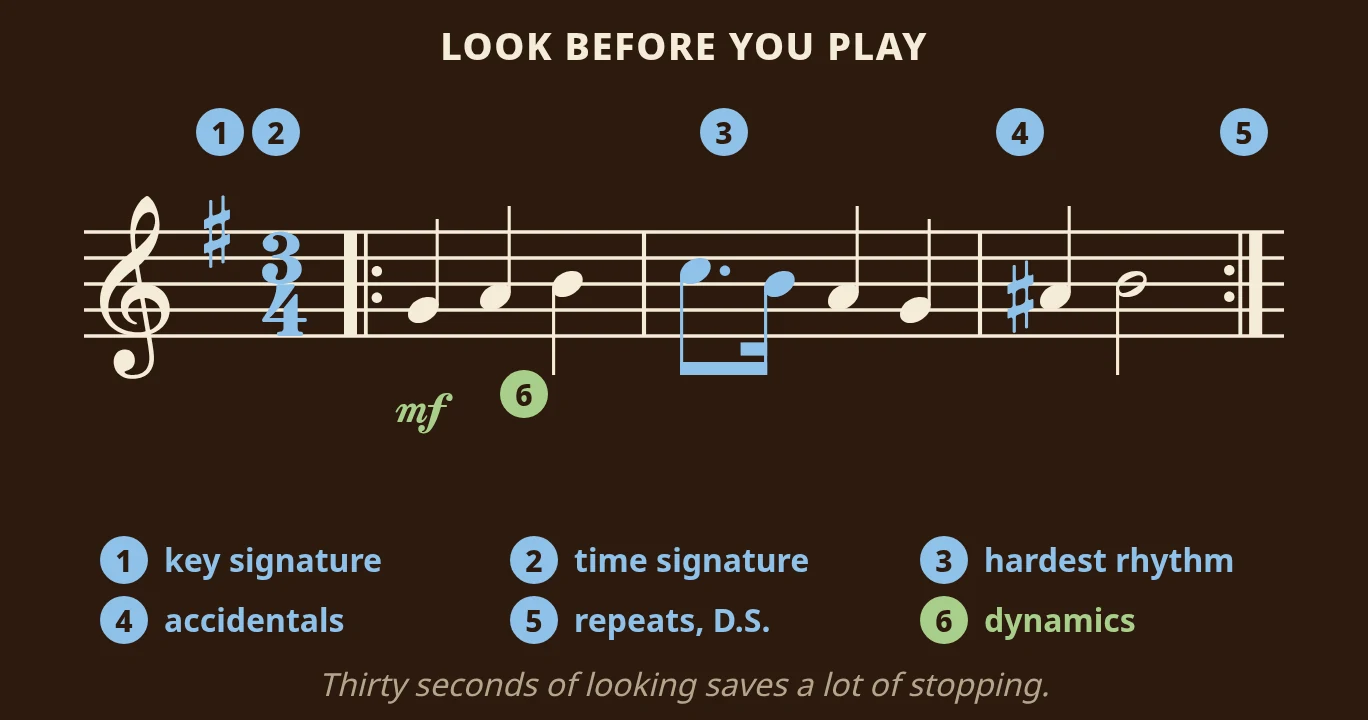
- Key signature. Say which notes are sharp or flat. Our guide on how to read key signatures has a two-second method for naming the key.
- Time signature and tempo. Feel the beat, and choose a tempo you can hold through the hardest bar, not just the first one.
- The hardest rhythm. Find it and count it once in your head. Rhythm is where most sight-reading falls apart.
- Accidentals and key changes. Notice any sharps, flats or naturals that are not in the key signature.
- The road map. Repeats, first and second endings, D.C. or D.S.: know where you are going before you get there. The signs are all in sheet music symbols explained.
- Dynamics and articulation. Loud or soft at the start, smooth or separated.
Try it on any piece right now. Set a timer for thirty seconds and say each of the six out loud. After a week or two, the checklist becomes automatic.
A 10-minute sight-reading routine
Here is a simple routine you can do every day, before or after your normal practice. It takes about ten minutes, and it needs one new page each time.
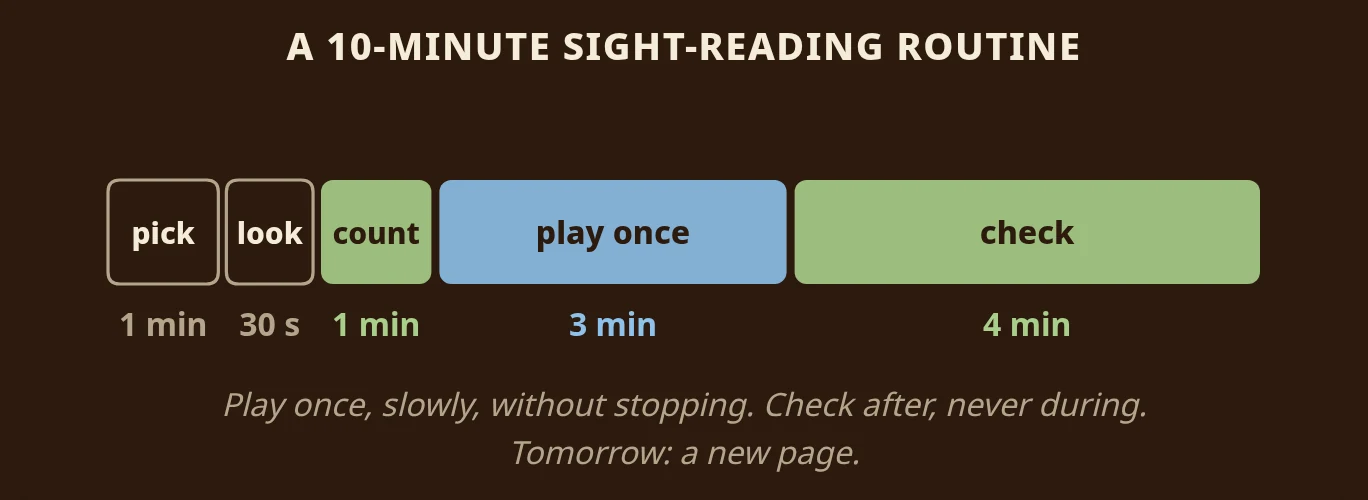
- Pick something new (1 minute). Older method books, easy duets, hymn books, folk song collections, or parts written for other instruments in your clef and range. You need lots of pages, so cheap and plentiful beats perfect.
- Look it over (30 seconds). Run through the six-point checklist above.
- Count the rhythm (1 minute). Tap or clap the first line while counting out loud. If a rhythm puzzles you, our guide on counting sixteenth notes covers the patterns that trip most people up.
- Play it once (3 minutes). Metronome on, at a slow tempo, without stopping. If you miss something, let it go and catch the next beat.
- Check it (4 minutes). Circle the bars where the beat broke. Play each of those once, slowly, and find out how the page should have sounded.
- Stop there. Don't polish it. Polishing turns sight-reading into learning a piece. Tomorrow's page is a new one.
How to know you are improving
Keep a simple count of the pages you read. When most of them go by without a break in the beat, move up a level. Progress depends far more on how many new pages you read than on how many weeks pass.
Five mistakes that slow you down
- Reading music that is too hard. Every read becomes a struggle, and you learn to stop. Go easier than you think.
- Rereading the same piece. The second time through is not sight-reading any more. It is memory.
- Starting too fast. Set the tempo by the hardest bar, not the first one.
- Looking down. Every glance at your hands costs you your place. Keep your eyes on the page.
- Listening first. Hearing a recording before you read turns the exercise into playing by ear. For sight-reading, listen after. (When you are learning a piece, hearing it first is fine. See our guide on learning a piece you have never heard.)
Read with other people
One of the best ways to practice keeping going is to read with someone else. A duet partner, a friend in your section or a family member at the piano will not wait for you if you stop, so you learn very quickly to skip a wrong note and find your place again. Easy duet books are perfect for this, and so are the other parts of your band or orchestra music. If you play in a group, the first read-through of a new piece in rehearsal is excellent sight-reading practice too: notice where you got lost, and look at those bars again at home.
How to handle a sight-reading test
Many lessons, exams and auditions include a short sight-reading test. It can feel stressful, but if you have been reading every day, the test is simply one more page. Here is a calm way to approach it:
- Breathe first. Take one slow breath before you look at the page. A calm start makes everything after it easier.
- Use the looking time. Go through the six-point checklist above. Most of all, find the hardest rhythm and count it silently.
- Choose a safe tempo. Pick a speed you can hold in the hardest bar. Judges would much rather hear a slightly slow, steady read than a fast one that falls apart.
- Keep the beat no matter what. If you play a wrong note, keep going. Most listeners will barely notice one wrong note, but everyone notices a stop.
- Play the dynamics. Many readers forget them under pressure. Even a simple change from soft to loud makes a read sound musical.
- Finish strong. Hold the last note for its full length. A confident ending leaves a good impression.
If you are preparing for an audition, our guide on preparing for an all-state band audition shows how to fit sight-reading practice into a longer plan.
Check yourself after the read
The check step is the one most people skip, because it needs to know what the page should have sounded like. In a lesson, your teacher can tell you. On your own, it is harder: you know a bar felt wrong, but not exactly what was wrong about it.
That is where Sheetly helps. After your read, take a photo of the page with your iPhone or iPad and press play. Sheetly plays it back with a playhead that follows the notes, so you can hear exactly how it should have gone. Where it differs from what you played, loop that bar, slow it down and count along until the two match. If a bar still makes no sense, ask the built-in coach about it.
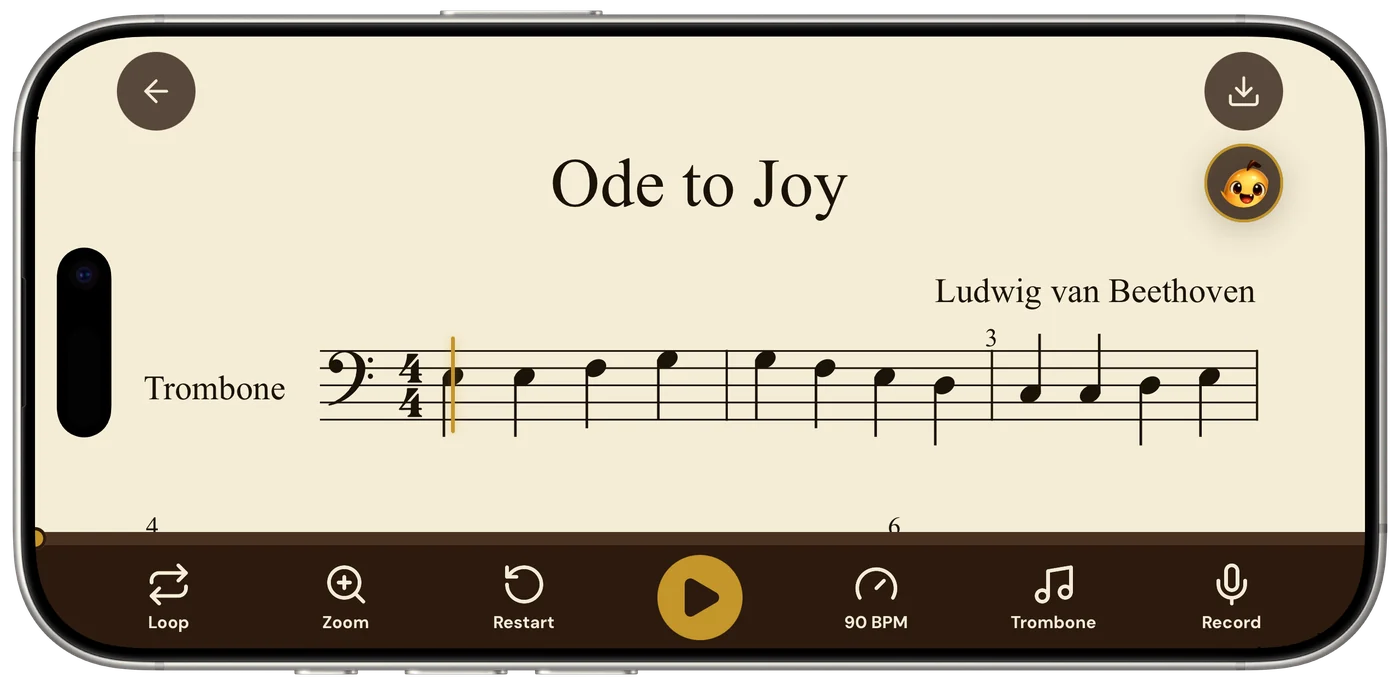
Remember the order: read first, then listen. The read is the practice. The listening is the answer key.
Questions
What is sight-reading?
Sight-reading is playing or singing a piece from the page the first time you see it, without practicing it beforehand. Lessons and auditions often include a sight-reading test.
How long does it take to get better at sight-reading?
It depends more on how many new pages you read than on how many weeks pass. With about ten minutes a day of new, easy music, many players find they stop less often within a few weeks.
What music should I use for sight-reading practice?
Anything new that is a level or two easier than your current pieces: older method books, easy duets, hymn books, folk songs, or parts for other instruments that use your clef. You need lots of pages, so quantity matters more than quality.
Should I stop to fix mistakes when sight-reading?
No. Keep the beat going and skip a note rather than stop. Fix the mistakes afterwards, in the check step. Stopping in practice trains you to stop in performance.