Slow it down. Then walk it back up.
A metronome tells you where the beat is. A score playing correctly at half speed tells you what the notes are.
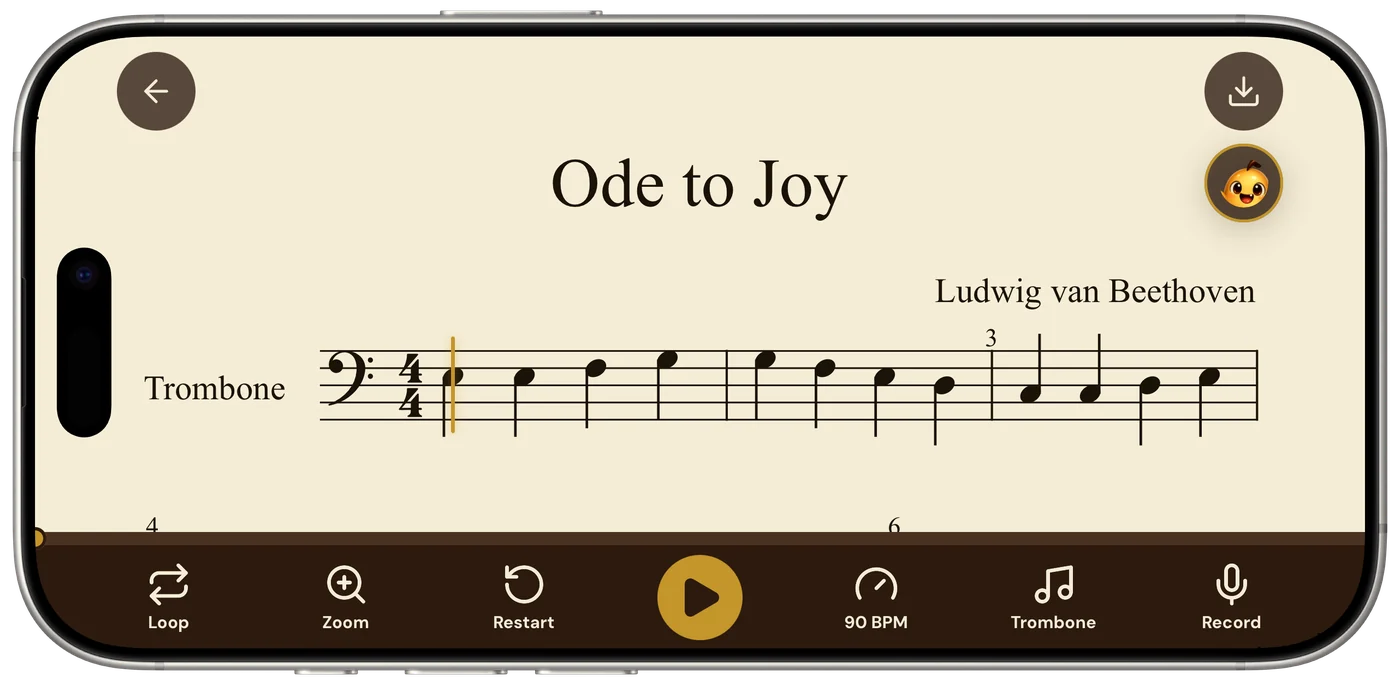
Every scanned score in Sheetly opens with a tempo chip in the bottom bar. It says 90 BPM by default. Most people tap Play and leave it there. The people who get better tap the chip first.
Why not just use a metronome?
A metronome tells you where the beat is. It does not tell you what the notes are, how long each one lasts, or whether the dotted crotchet you keep rushing is actually supposed to hang on for a beat and a half. It clicks, you guess, and if you guess wrong it clicks approvingly anyway.
A score that plays is different. Slow it to half speed and you hear the piece correctly, slowly: every pitch, every duration, every rest, in the right place. Your ear gets a model to copy. When you play along and something clashes, the clash is the lesson. That is what a metronome can never give you, because a metronome has never read the music.
Slow enough to be right
The rule is simple. Pick a tempo where you can play the passage without a mistake. Not nearly without a mistake: without one. If that is 60 BPM on a piece marked 120, so be it. Nobody is listening, and the playhead does not judge.
At that speed, play along with the score a few times. Listen for the places where you and the playback drift apart. Those are the notes you do not actually know yet, however well you thought you did at full speed.
The ladder
Once the slow version is clean, walk it back up. Do not jump. Climb.
- 60 BPM. Play the passage until it is clean three times running. This is the floor.
- 72 BPM. A step, not a leap. If it breaks, loop the bar that broke and stay here until it does not.
- 84 BPM. By now the notes should be automatic and you can start listening to the shape of the phrase instead of the fingering.
- Written tempo. The last rung. If you slip, drop one rung, not four. You have earned the lower rungs; they are still there.
The ladder works best on a short passage. Tap Loop, set four bars, and run the ladder on just those. Then widen the loop and run it again.
The ladder is slower than bashing through at full speed. It is also the only version of practice where every rep you play is a correct one, and correct reps are the only ones that count.
Your part, at your speed
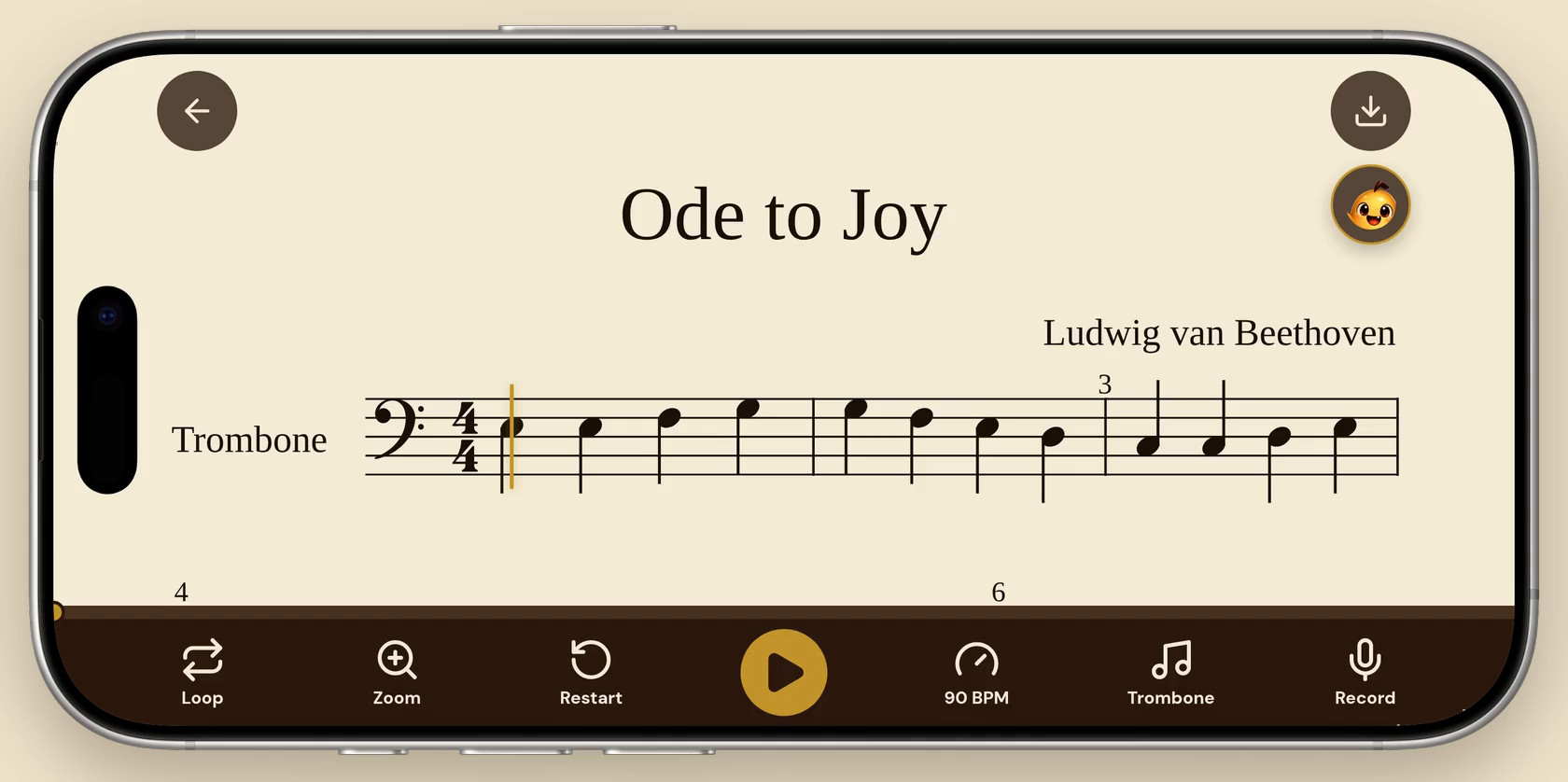
Photograph the page or import a PDF, and Sheetly gives you a score that plays at any tempo you choose, on the instrument you choose. Slow it down, get it right, walk it up. Sheetly is on the App Store for iPhone and iPad.
Start at 60.
Scan your part, drag the tempo down, and climb the ladder one rung at a time.

Free to download · iPhone and iPad · Android on the way

 Written by Love Ranmar, who makes Sheetly. hello@trysheetly.com
Questions
How slow should I set the tempo?
Slow enough that every note is right, not merely comfortable. If bar 12 falls apart at 90, try 60; if it falls apart at 60, try 45. The routine in this article then walks it back up in small steps.
Does slowing the tempo change the pitch?
No. Playback is synthesized from the score itself, not stretched from a recording, so tempo and pitch are independent. Half speed sounds like the piece at half speed, not like a slowed-down tape.
Is this better than practising with a metronome?
It is a different job. A metronome tells you where the beat is; the score playing correctly at a slow tempo tells you what the notes are and how long each one lasts. Learn the notes from the score first, then use a metronome to hold the tempo honest.