Record a take, then hear yourself against the score
Listening to yourself straight after playing is useless, because you remember what you meant. A day later you are just a listener.
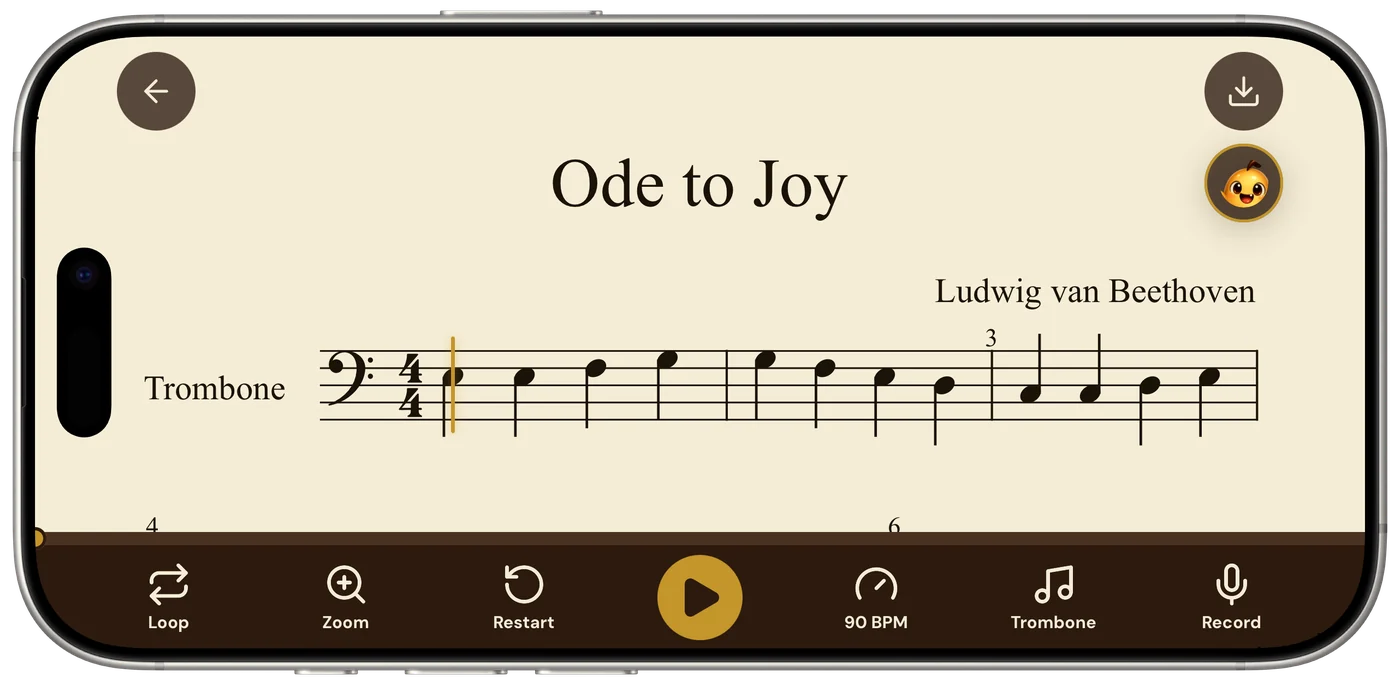
At the far right of the bottom bar in the Sheetly player there is a microphone icon labelled Record. Tap it, play your part along with the score, and you have made a take.
What a take is
A take is a recording from your phone's microphone of you playing, lined up against the score. Play it back and you hear yourself next to the notes that were written. It is the same passage twice: once as the page says it should go, once as you actually went.
There is no grading, no score out of a hundred, no red notes. Just you and the reference, and your ears.
Why you should listen tomorrow, not today
Listening back straight away is almost useless. You have just played it, you remember what you meant, and your brain helpfully fills in the version you intended. Everyone does this. It is why every musician thinks a take went better than it did.
A day later the memory is gone and you are just a listener. That is when the rushed semiquavers in bar 9 jump out, and the note that was always slightly under, and the breath you take in the middle of a phrase because you did not plan one. It is brutal. It is also the most honest teacher you will ever have, and it costs nothing.
A small ritual
- One take per session. Not ten. Warm up, practise, and at the end record the passage you worked on, once, as if it counted.
- Do not listen yet. Put the phone down. Tomorrow's session starts by listening to yesterday's take before you play a note.
- Write down one thing. The single thing that bothered you most. That is today's practice.
- Keep the best. When a take is better than the one you kept last week, it replaces it. Over a month you end up with a short record of the piece getting better, which is a more encouraging thing to own than you would expect.
Takes are stored on your device in the Recordings folder of your Library. Already-scanned scores play offline, so you can record in a practice room with no signal.
Where takes live
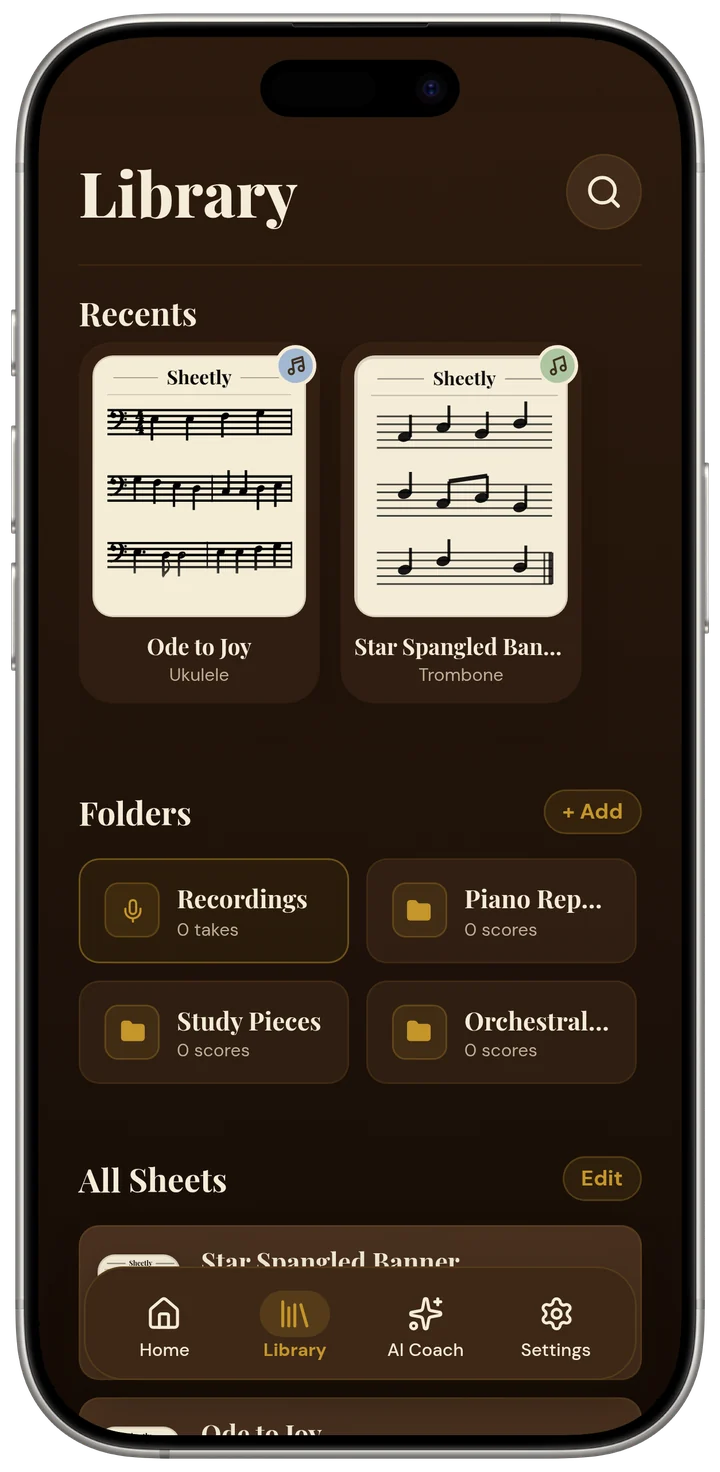
Open the Library tab and you will find a Recordings folder with a microphone on it, alongside your own folders. That is where every take goes. Delete the ones you do not need. Keep the one you are proud of.
Record one tonight
Photograph your part or import the PDF, open it, tap Record, and play the passage you have been working on. Then leave it alone until tomorrow. Sheetly is on the App Store for iPhone and iPad.
One take. Listen tomorrow.
Scan your part, tap Record, and find out what you actually sound like.

Free to download · iPhone and iPad · Android on the way

 Written by Love Ranmar, who makes Sheetly. hello@trysheetly.com
Questions
Does Sheetly grade my playing?
No, and that is deliberate. A take is a recording lined up against the score; you listen a day later and hear what a listener hears. No score out of a hundred, no red and green notes.
Where do my takes live?
With the score they were recorded against, in your library. Open the piece later and your takes are there to play back.
Should I record with or without headphones?
The take comes from the phone’s microphone. With headphones on, it captures only your playing; without them, it captures you and the score’s playback together. Both are useful: solo to hear yourself exposed, together to hear how you sit against the written rhythm.