How to Count Multi-Measure Rests and Come In on Time
Wondering how to count multi-measure rests? In this guide, we explain what the thick bar with a number means, a counting method that keeps your place, how rehearsal marks and cue notes help, and what to do if you get lost, with a picture for every step.

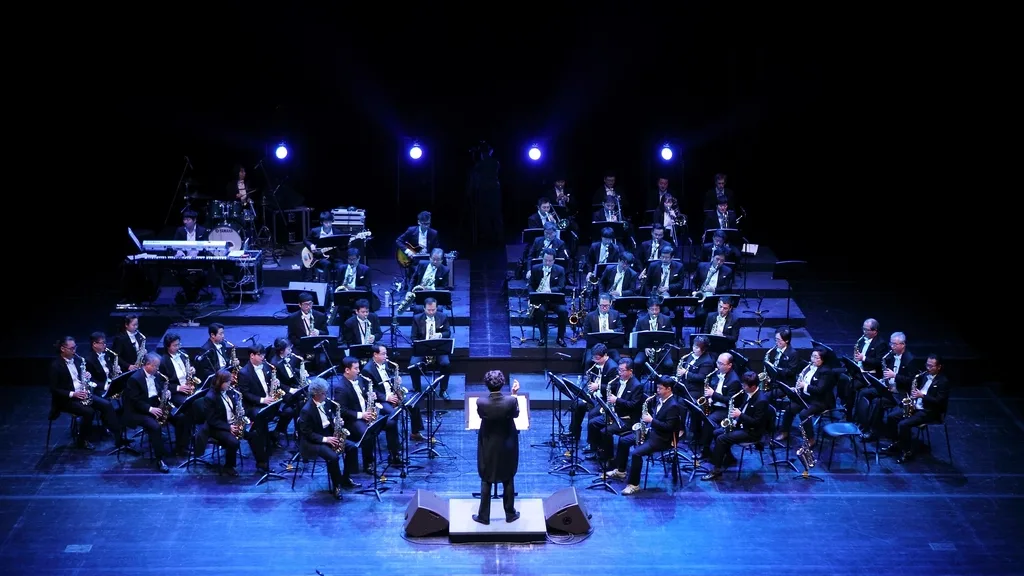
Have you ever sat in band rehearsal staring at a thick black bar with a big number over it, counting under your breath, and then realized you had no idea whether you were on measure 9 or measure 10? Long rests are one of the most stressful parts of playing in a group. Everyone else is playing, you are silent, and your entrance is coming whether you are ready or not.
Counting multi-measure rests is a skill, and like any skill it can be learned. You need to know what the symbol means, a counting method that keeps track of both the measures and the beats, and a few landmarks in the music that tell you whether your count is still right.
In this guide, we walk you through how to count multi-measure rests step by step: reading the symbol, counting with measure numbers, using rehearsal marks and cue notes, recovering when you lose your place, and practicing your entrances at home. Each step comes with a picture, and at the end we share an easy way to practice coming in on time.
How to count multi-measure rests
Step 1: Know what the symbol means
A multi-measure rest (also called a multirest or a long rest) is a thick horizontal bar across the middle of the staff, with short vertical lines at each end and a number above it. The number tells you how many full measures you rest.
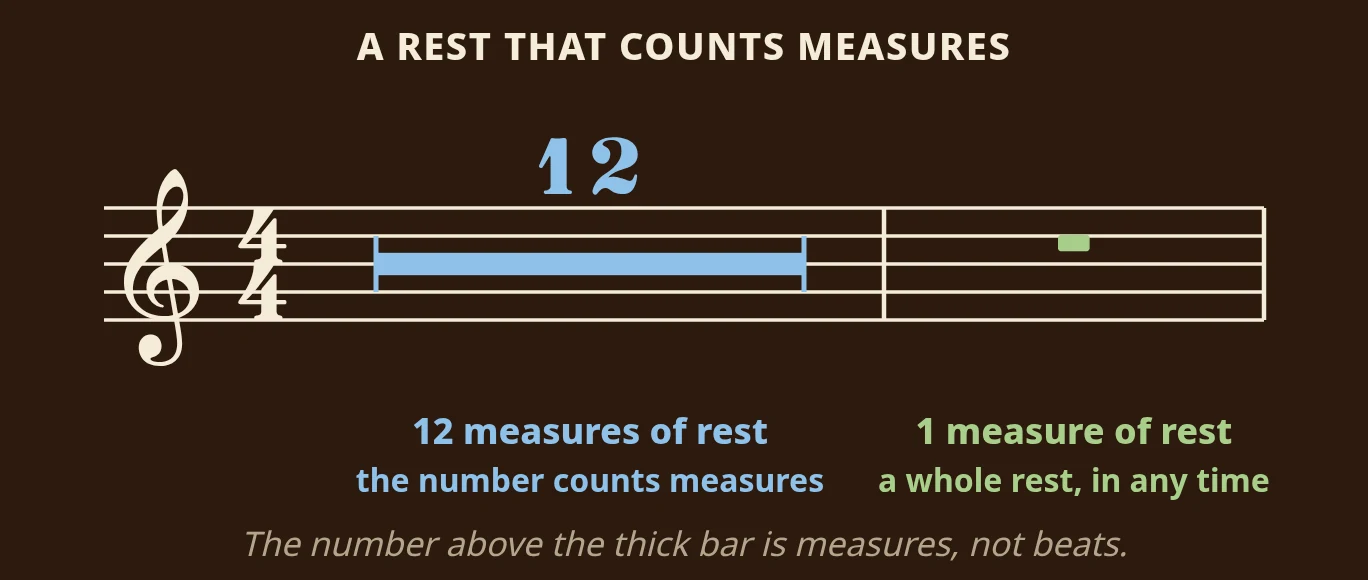
A "12" above the bar means twelve full measures of silence. Not twelve beats: twelve whole measures. In 4/4 time, that is forty-eight beats. In 3/4 time, it is thirty-six.
Compare it with a single whole rest, the small block that hangs down from the fourth line of the staff. When a whole rest fills a measure on its own, it means one full measure of rest in any time signature, even in 3/4, where a whole note would not fit.
Why band and orchestra parts have so many long rests
In a band or orchestra, your part shows only your notes. While you rest, the rest of the group is playing music you cannot see. A flute part might have thirty measures of rest while the brass play a chorale, and a percussion part might sit out half a movement. Instead of printing thirty empty measures, the part squeezes them into one symbol.
Older ways of writing short rests
Some older editions write short multi-measure rests as thick blocks between the staff lines, instead of a bar with a number.
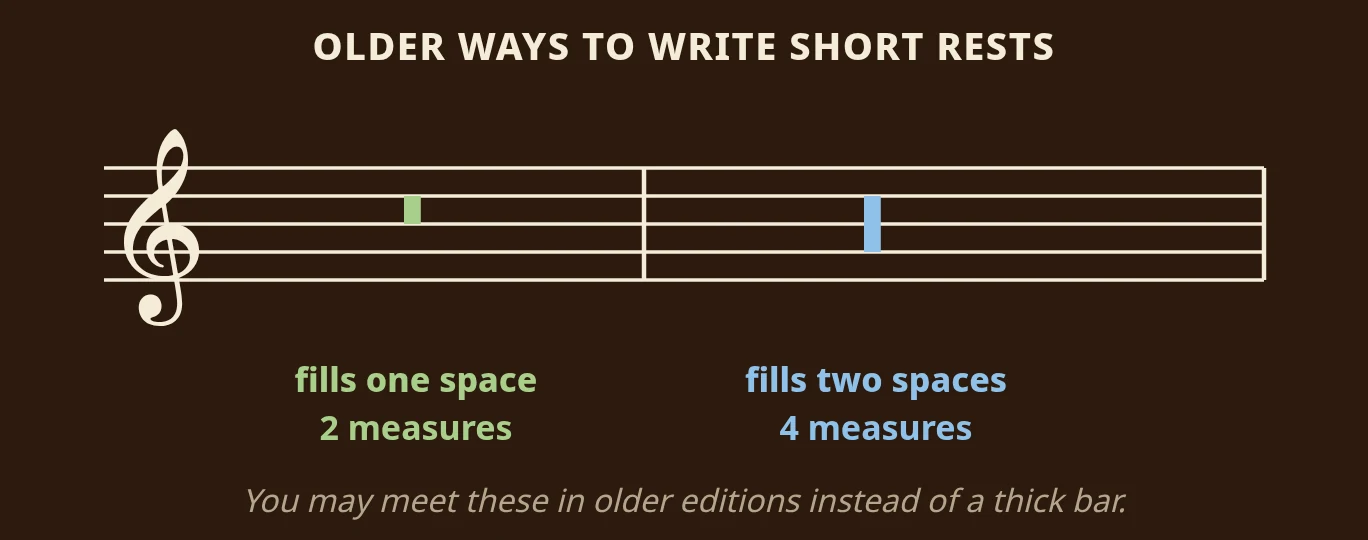
A block that fills one space (between the third and fourth lines) means two measures. A block that fills two spaces (from the fourth line down to the second) means four measures. They can be combined: a four-measure block next to a two-measure block means six. You will not see these often in modern school music, but they are worth recognizing.
Step 2: Say the measure number on beat 1
The simplest way to count a long rest is to replace the "1" of each measure with the measure number. In 4/4, count: "1 2 3 4, 2 2 3 4, 3 2 3 4, 4 2 3 4", and so on.
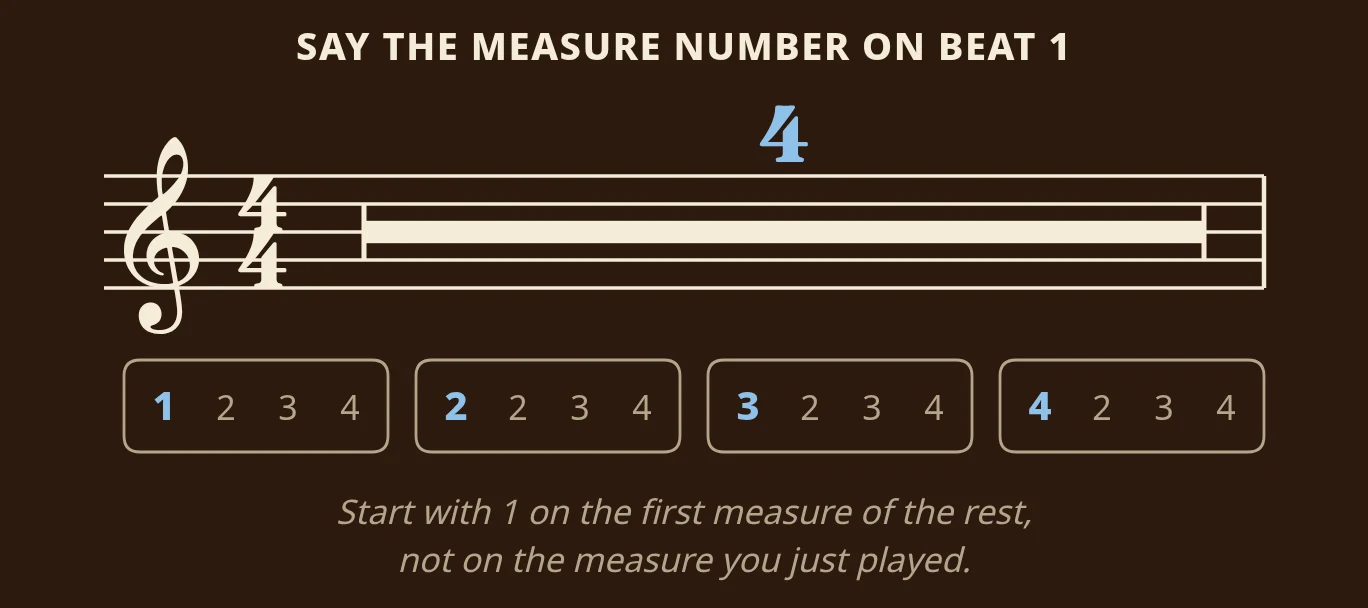
This method gives you two things at once. You always know which measure you are in, and you still feel every beat, so you notice if the tempo changes. In 3/4, it becomes "1 2 3, 2 2 3, 3 2 3". In 2/4, it is just "1 2, 2 2, 3 2".
Start on the first measure of the rest
The most common mistake is counting the measure you just played as "1". It feels natural, because you are still in the habit of counting, but it makes you come in one measure early. The "1" belongs to the first measure where you are silent.
Use your fingers for long rests
For long rests, fold a finger on your free hand for each measure as you count. Music is usually built in phrases of four or eight measures, so groups of four are easy to feel. If your count says 7 but the band has clearly just finished a phrase, you are probably one measure off, and you can quietly correct yourself.
Step 3: Use rehearsal marks to check your count
Counting on its own drifts. Even good counters lose a measure now and then. That is why parts include landmarks that tell you where you really are.
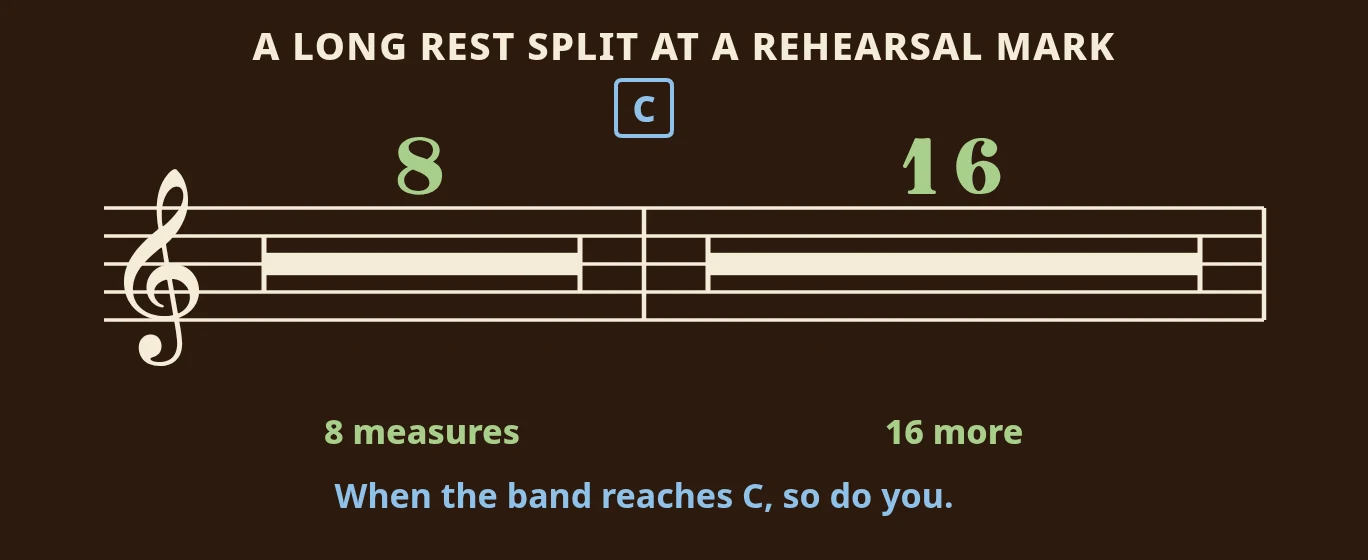
Rehearsal marks are the boxed letters or numbers printed above the staff, such as A, B, C. Every player in the group has the same marks in the same places. A long rest is usually split at each one, so a rest of 24 measures might be printed as an 8 and a 16, with letter C in between. When the band reaches C, so do you: if your count says 7 when the music clearly arrives at C, trust the C and start counting the 16 from there.
Other changes split a rest too. A new key signature, a new time signature or a new tempo marking all appear in the middle of long rests. Read them before your entrance, so you are not surprised by a new key on your first note.
Step 4: Read the cue notes
Near the end of a long rest, many parts include cue notes: small notes with another instrument's name above them, such as "Fl." for flute or "Tpt." for trumpet.
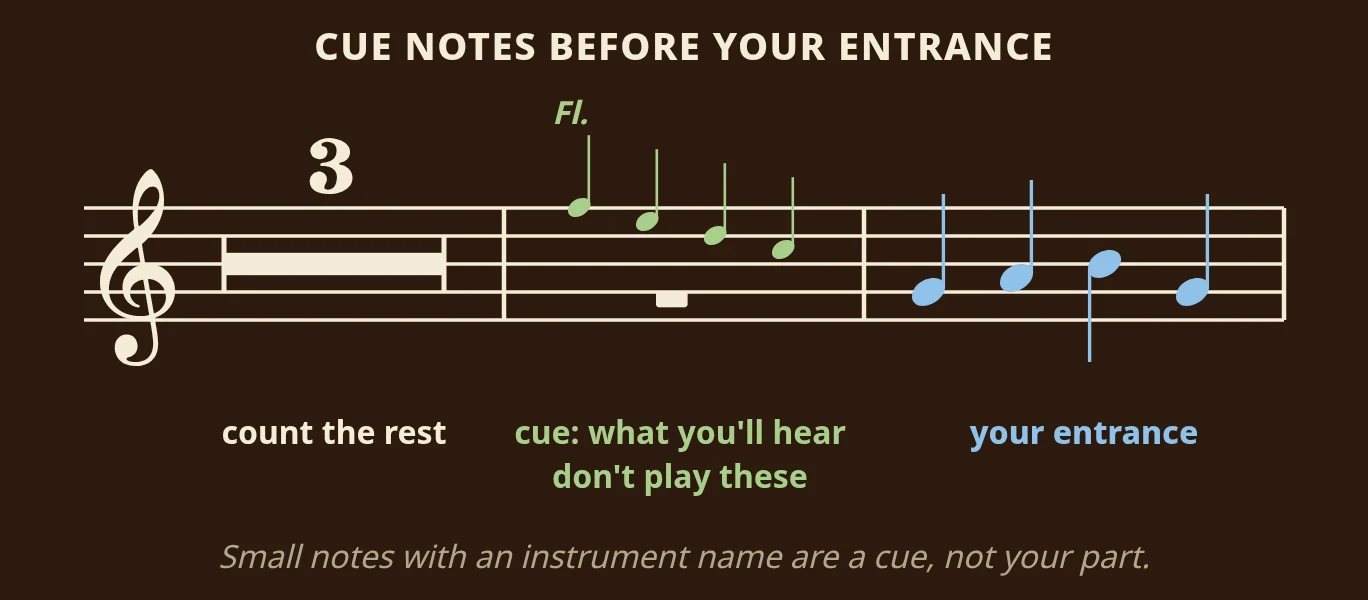
Cue notes show you what you will hear just before you come in. You do not play them, unless your director asks you to cover a missing part. Their job is to give you something to listen for. When you hear the flute play that little descending line, you know your entrance is next.
A cue is one of the most reliable landmarks you have, because it ties your count to sound, not just to numbers. If you have a cue, listen for it every time, and check that your count agrees with it.
Watch the conductor
Your part does not show everything. If the band holds a note with a fermata or slows down, that may not appear in your rest, and your count needs to wait for it. Watch the conductor through the last few measures before your entrance. The conductor will often look at your section or give a small cue just before you come in.
Step 5: Know what to do when you get lost
It happens to everyone, including professional players. The important thing is what you do next.
- Don't guess. Coming in alone in the wrong place is much more noticeable than coming in a little late.
- Stay ready. Keep your instrument up and keep listening.
- Wait for the next landmark. A rehearsal mark, your cue, or the start of a new section. Come in there.
- Ask afterwards. After the piece, ask your stand partner or section leader where you lost it.
Then pencil it in. Write "flute solo", "4 after C" or a big arrow above your entrance. Directors expect parts to have pencil marks, and the next rehearsal will be much easier.
Step 6: Practice your entrances at home
Rests are hard to practice alone, because the music you are counting through is not in your part. But you can still practice the most important moment: the entrance. Here is a simple routine:
- Set a metronome to the tempo of the piece.
- Count the last four measures of the rest out loud, using the measure number method.
- Breathe on the beat before your entrance.
- Come in.
- Repeat it five times in a row, until the entrance feels automatic.
If you can find a recording of the whole piece, play along with it and count every rest out loud. Listen especially for the instrument in your cue notes, so you will recognize it in rehearsal.
Step 7: Practice with a way to check yourself
The hardest thing about practicing long rests at home is that nothing tells you where you are. A metronome clicks the beats, but it does not count the measures for you.
That is where Sheetly helps. Take a photo of your part with your iPhone or iPad, and Sheetly plays it back with a playhead that follows the notes. When it reaches a multi-measure rest, it plays the rest out one measure at a time, with a counter on screen (3 / 16, then 4 / 16 and so on). You count along, watch the counter to check yourself, and practice coming in on the right beat, just as you will in rehearsal. You can change the tempo, loop the entrance, and ask the built-in coach about any measure on your page. Our guide on how to scan sheet music and hear it played back shows how to photograph your part so it reads cleanly.
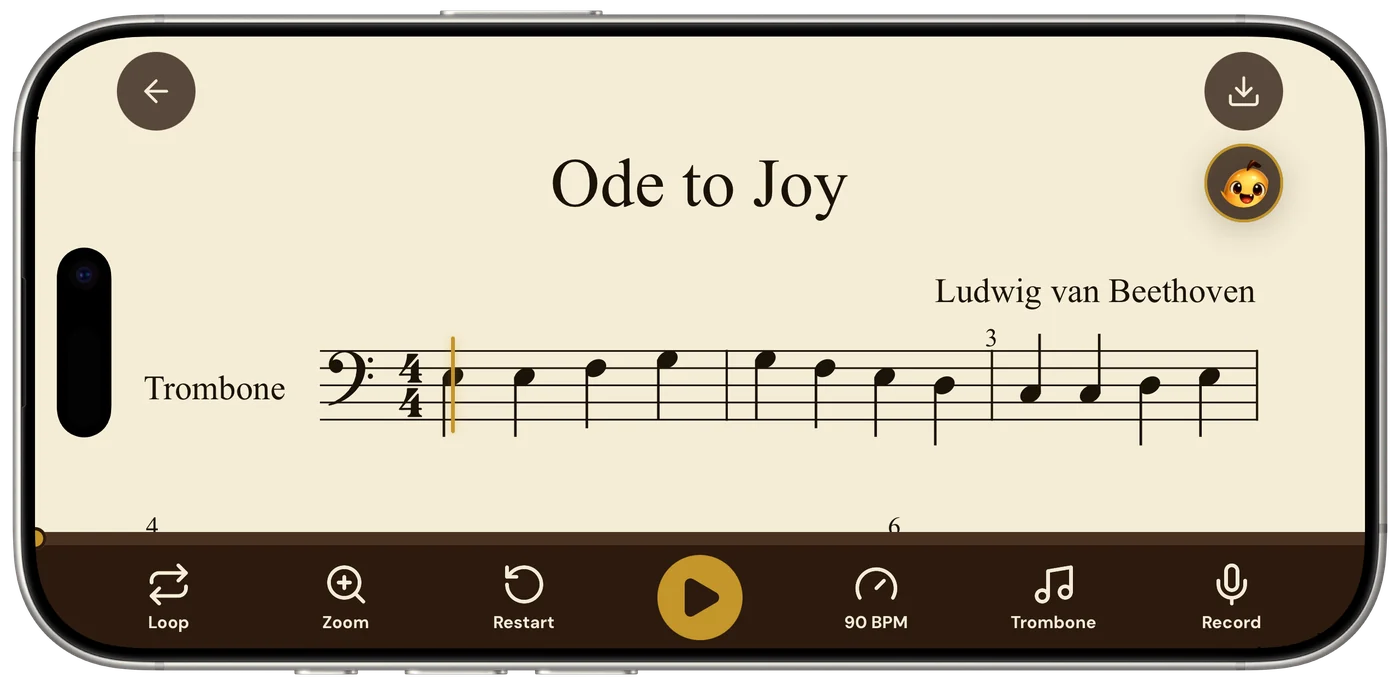
Count first, then check the counter. When your count and the screen agree every time, you will walk into rehearsal knowing exactly where your entrance is.
Questions
What does the number above a rest mean?
It is the number of full measures you rest. A thick bar with a 12 above it means twelve measures of silence, whatever the time signature.
How do you count a long rest without losing your place?
Say the measure number on beat 1 of each measure ("1 2 3 4, 2 2 3 4, 3 2 3 4"), starting on the first silent measure. Check your count against rehearsal marks and cue notes as they come.
What does tacet mean in a band part?
Tacet means your part is silent for a whole movement or section, so there are no measures to count. Wait for the next movement or section where your part has notes, and count from there.
Do I play cue notes?
Usually not. Cue notes are small notes that show another instrument's part, so you know what to listen for before your entrance. Play them only if your director asks you to cover that part.