Six Pages From a School Band Book, and How to Learn a Band Part With No Recording
Ever brought home a band part that has no recording anywhere? In this story, we look through six real pages from a school band book for trombone and show you how to learn a part on your own, from long rests to off-beats and triplets.

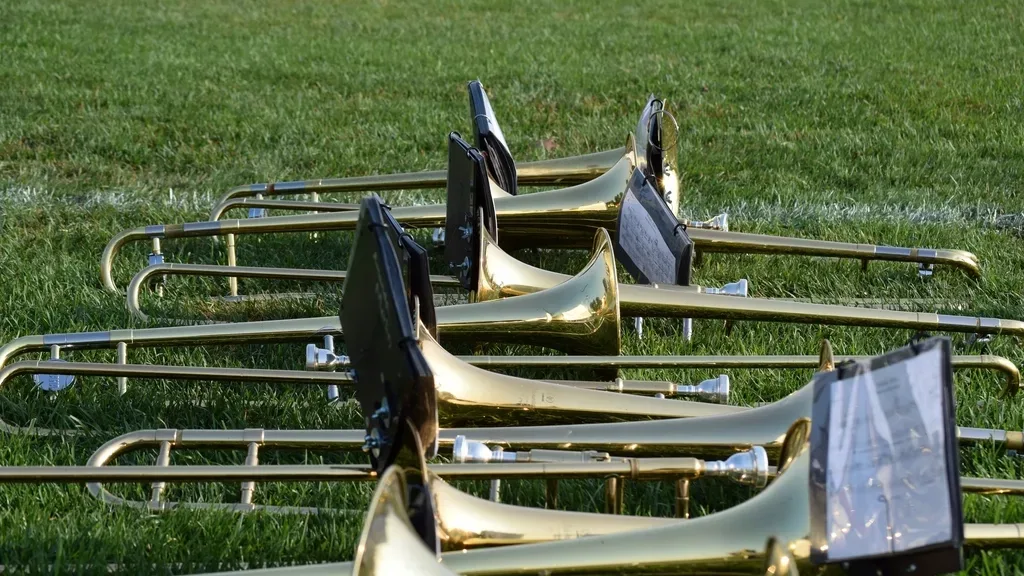
If you play in a school band, you know the binder. It goes home in your bag, comes back to rehearsal, and slowly fills up with photocopied parts. We photographed six pages from a real school band book, a trombone part book from a Swedish school band, to see what a young player actually takes home. The answer is a lot of good music, and not one recording of their own part.
A band part is the music for just one group of instruments, not the whole band. On its own, a part can be hard to make sense of: long rests while other instruments play, off-beat notes that only fit once you hear the melody, and rhythms that look harder than they sound. Learning it alone at home is a real skill.
In this story, we walk you through the six pages, then show you how to learn a band part when there is nothing to listen to, step by step, with a picture for each tricky rhythm you are likely to meet.
What is in the binder
Film music first
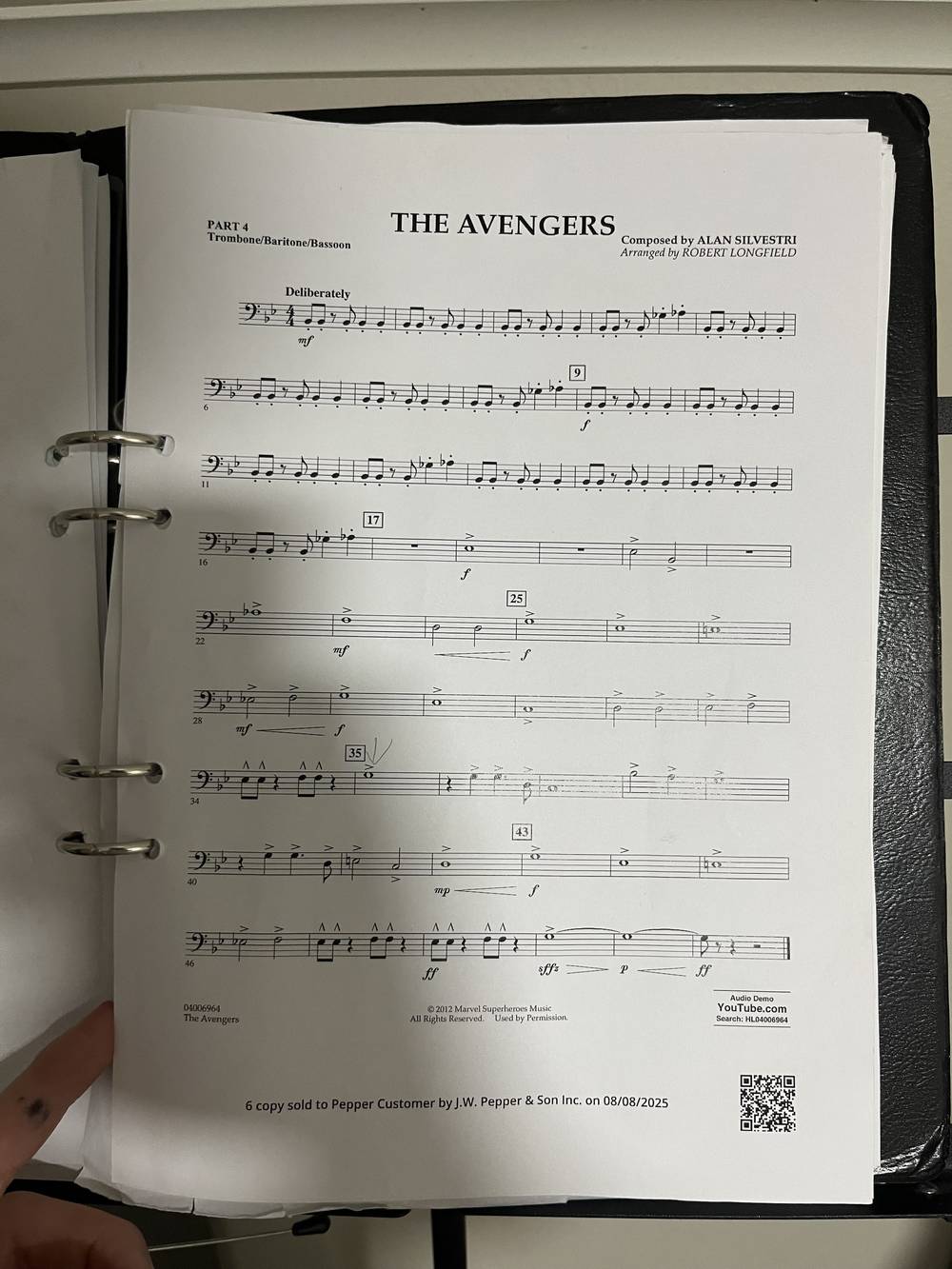
The front page is The Avengers, Part 4, marked Trombone/Baritone/Bassoon. It is in bass clef, with two flats in the key signature, and it opens with eight bars of off-beat eighth notes before the first accent. It is a photocopy of a bought arrangement, and the holes are punched slightly off-centre, so the rings lift the left edge.
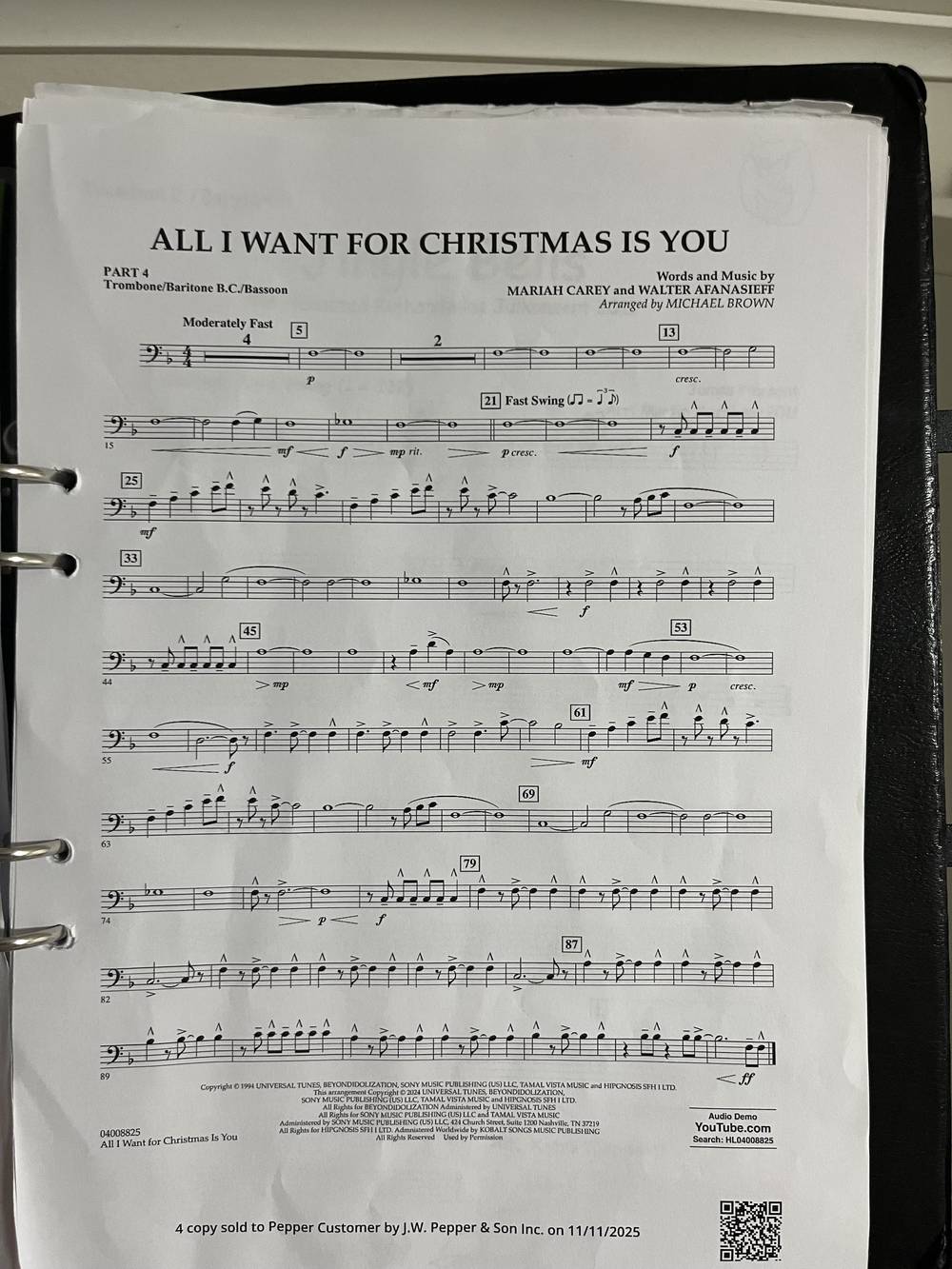
Two pages on is All I Want for Christmas Is You, Part 4 again. It starts with long tied whole notes for the first 20 bars, then switches to a Fast Swing and a page of accented quarter notes. The page is wavy enough that the staves bend in the photo.
Then Beethoven
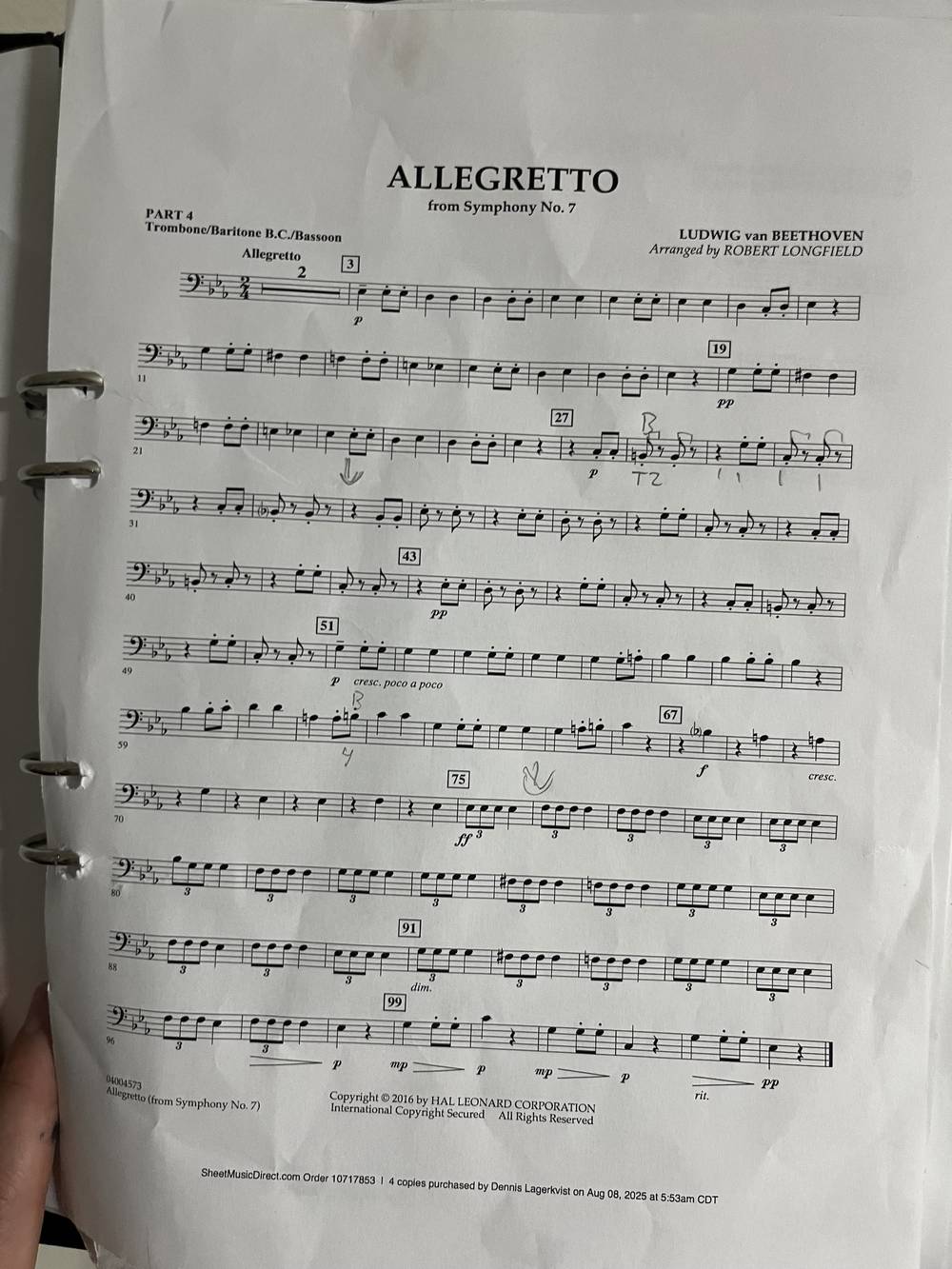
In the same binder, on the same kind of paper, is the Allegretto from Beethoven's Seventh Symphony, also Part 4. It is in 2/4 time with three flats, and from bar 75 onwards it is nothing but triplets. Someone has pencilled slide positions and a few circled reminders above the hard bars, which is exactly what you do when there is no recording of your part to check against.
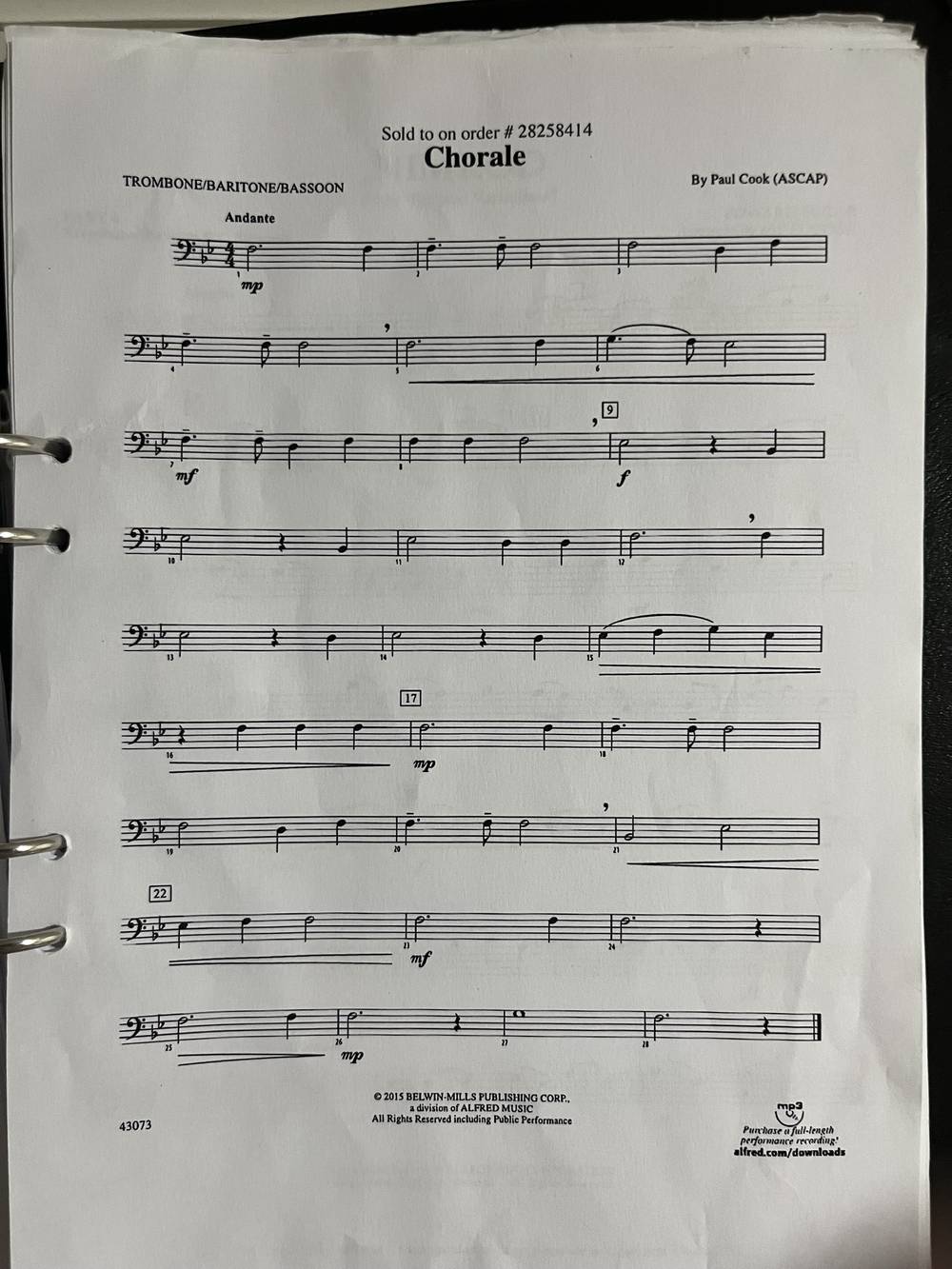
Next to it is a Chorale by Paul Cook: 28 bars of half notes and quarter notes marked Andante, with breath marks. It is the simplest page in the book, and probably the one the band plays at the start of every rehearsal.
A Swedish tune with a car on it
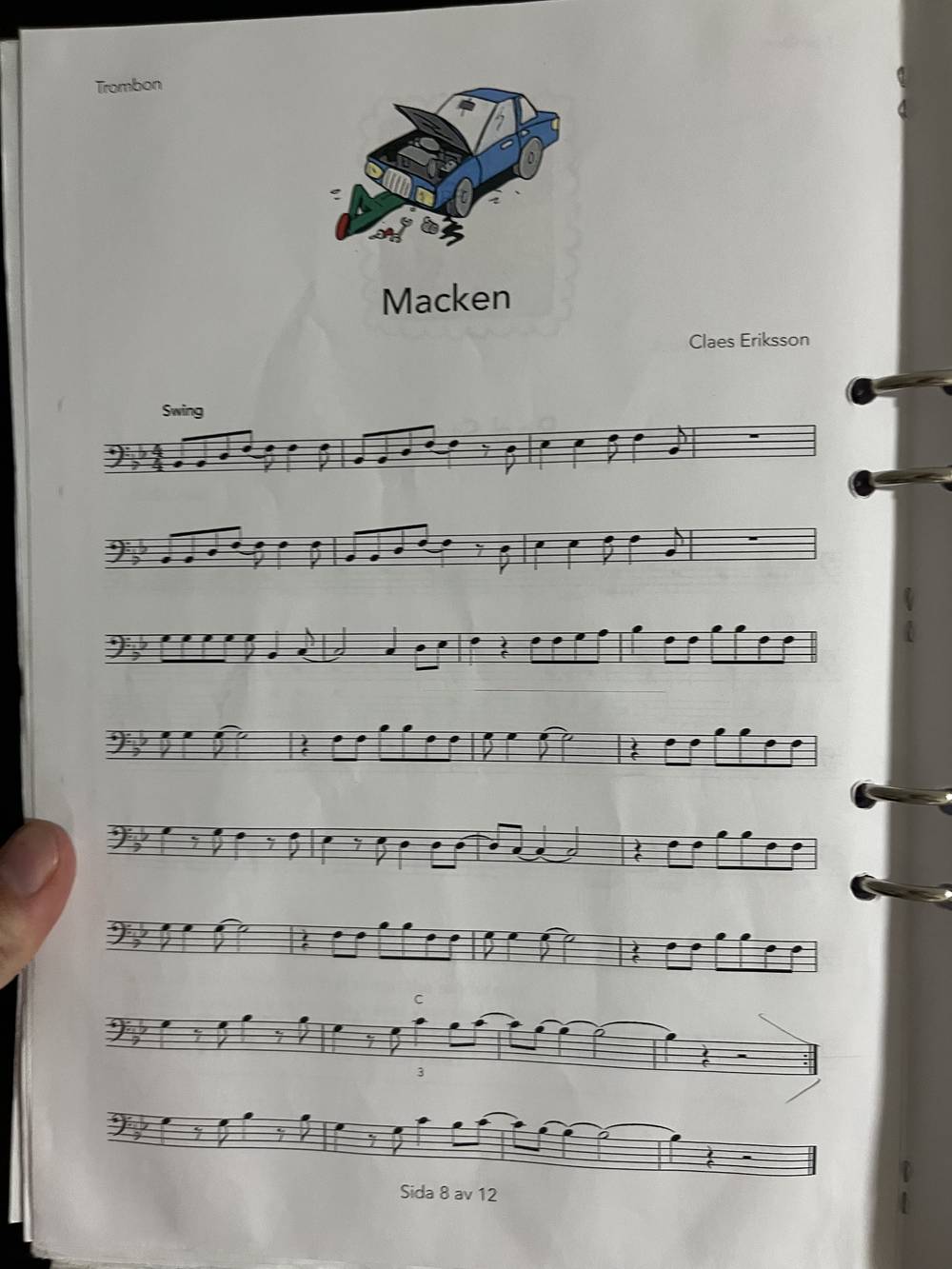
Macken is a Swedish tune, and this page is clearly from a method book for beginners: a cartoon car with its bonnet up, a Swing marking, eight easy lines of music and "Sida 8 av 12" (page 8 of 12) at the bottom. The part is simply labelled Trombon. The paper is thinner than the rest and the rings sit on the right, so this page curls the other way.
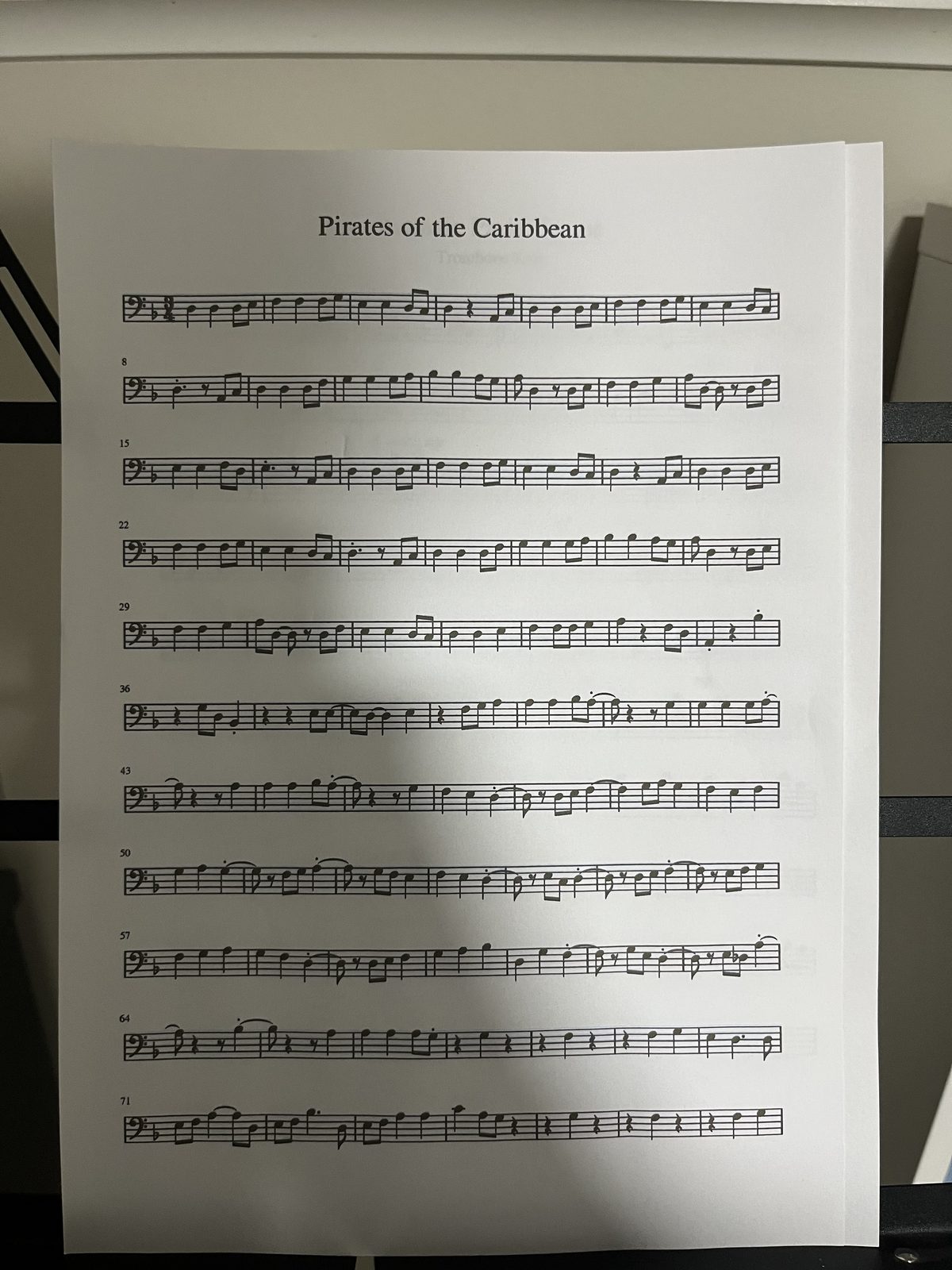
And then there is Pirates of the Caribbean, the one everybody asks for. It is not in the binder at all. It is a loose sheet, photographed flat on a table with the shadow of the phone across the middle: no part label you can read, no dynamics, and 77 bars of bass clef eighth notes.
What none of them come with
Some of these pages print a link to a recording of the full band. Some have nothing. None of them comes with a recording of Part 4 on its own. A young trombonist takes this binder home and has to work out what the fourth part sounds like from the notes alone, with nothing to play along to. Here is how to do that.
How to learn a band part with no recording
Step 1: Read the map before you play
Before you play a note, spend one minute looking over the whole page. Check the clef, the key signature, the time signature and the tempo marking at the top. Then look for the landmarks: repeat signs, first and second endings, long rests, and any place where the time signature or key changes. On The Avengers, that means bass clef, two flats (every B and every E is flat), and a long stretch of off-beats right at the start.
Knowing the map stops surprises. You will not be halfway down the page before you notice the key changed three lines ago.
Step 2: Count the long rests
Band parts are full of long rests, because the melody is often somewhere else in the band. A rest of several bars is usually written as a single thick bar with a number above it: a multi-bar rest.
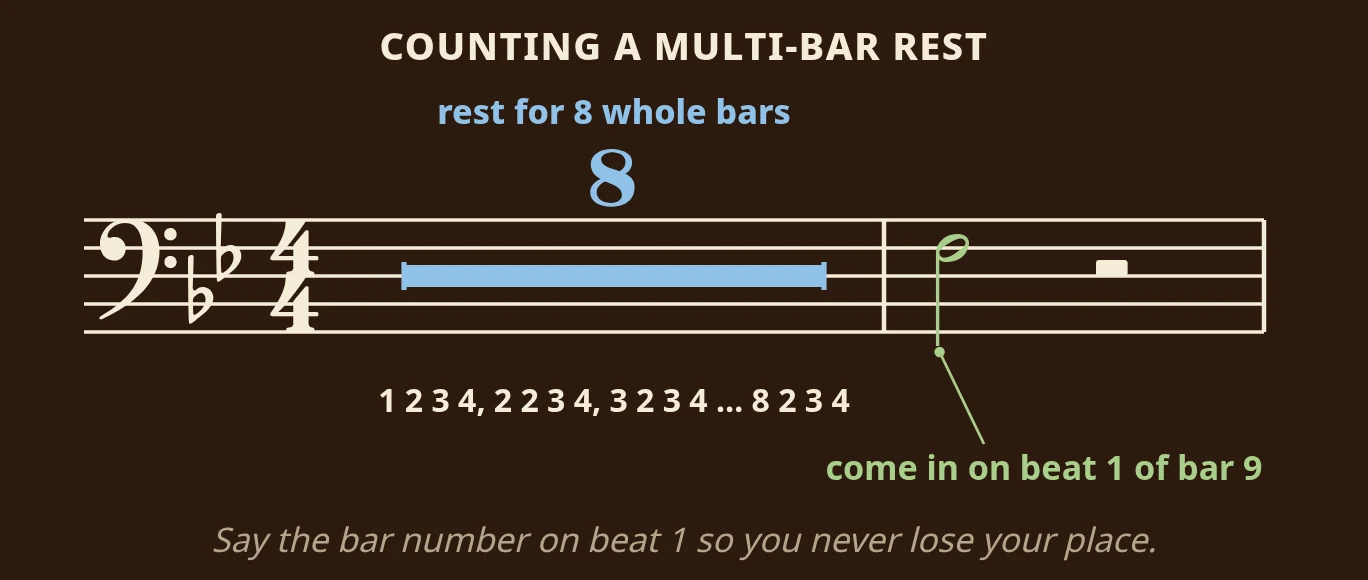
The number tells you how many whole bars to rest. To keep your place, say the bar number on beat 1 of each bar instead of "1": "1, 2, 3, 4, 2, 2, 3, 4, 3, 2, 3, 4", and so on up to 8. Hold up a finger for each bar if that helps. When you reach the end of the eighth bar, you come in on beat 1 of the next one.
The common mistake is to stop counting and wait for the band to remind you. At home there is no band, so practise counting your rests out loud, every time, as if they were notes.
Step 3: Count off-beats out loud
An off-beat is a note that falls between the beats instead of on them. The opening of The Avengers part is built from them: an eighth rest on each beat, then an eighth note on each "and".
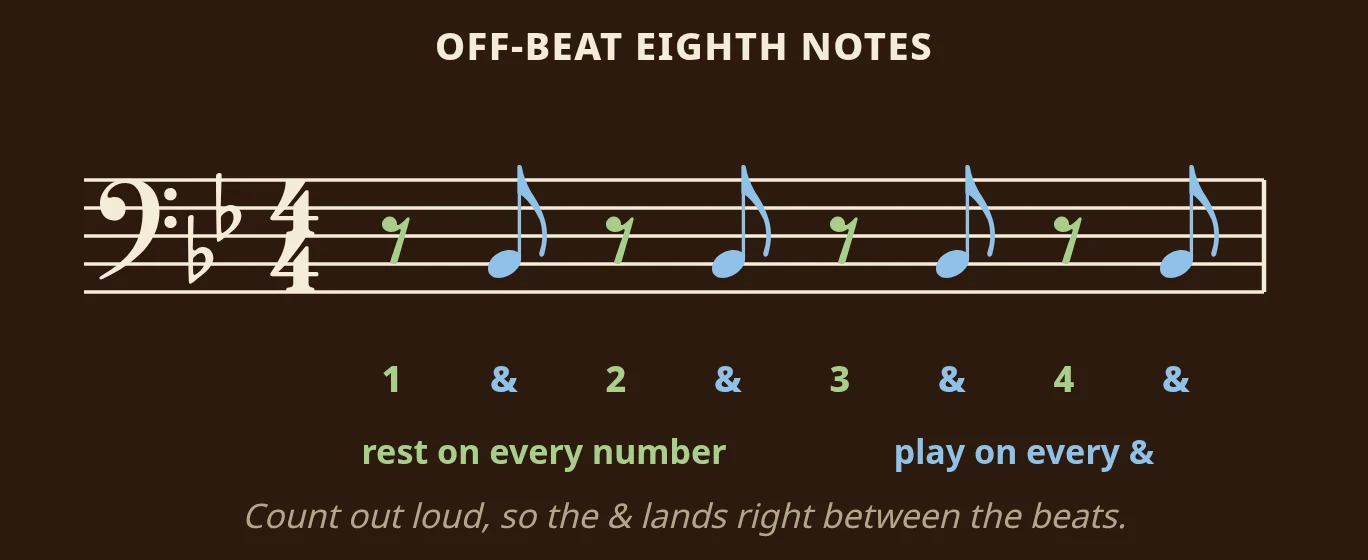
Count "1 and 2 and 3 and 4 and" out loud, slowly, and play only on the "and". Say the numbers a little louder than the "ands" at first, so you feel the beat you are not playing. The common mistake is to drift onto the beat, so the notes slowly move from "and" to number. Tap your foot on the numbers to keep them steady.
Step 4: Learn the triplets slowly
A triplet squeezes three equal notes into the time normally taken by two. In 2/4 time, two eighth notes fill one beat. Three triplet eighth notes, marked with a small 3, also fill one beat, so each one is a little shorter.
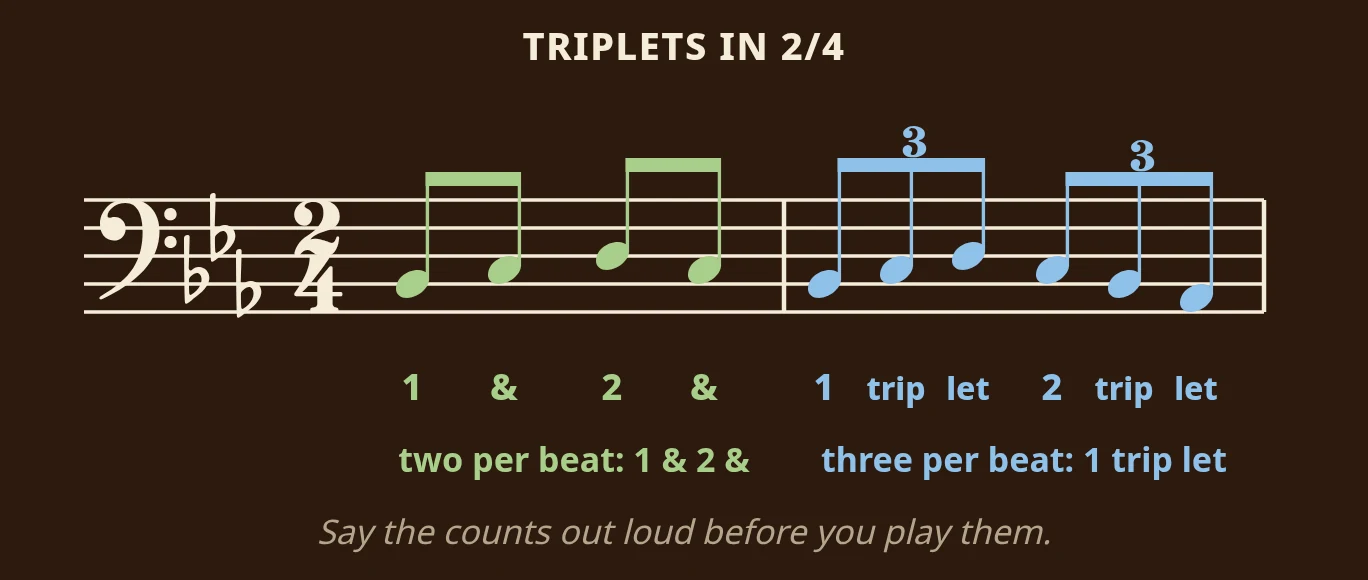
Count triplets as "1 trip let, 2 trip let", with the three syllables evenly spaced. Practise switching between "1 and" and "1 trip let" on one note before you try the real passage. Bar 75 of the Beethoven, where the triplets begin, is a perfect place to loop slowly: play a few bars of triplets at half speed until they sound even, then raise the tempo step by step.
Step 5: Pencil in what helps
The Beethoven page shows the last habit perfectly: someone pencilled slide positions and circled reminders above the hard bars. Your part is yours to mark, as long as you use a pencil. Write in breath marks, fingerings or positions, a circle around an accidental you keep missing, or the counting for a tricky rhythm. Every mark you add is one less thing to remember next time.
Hear your own part
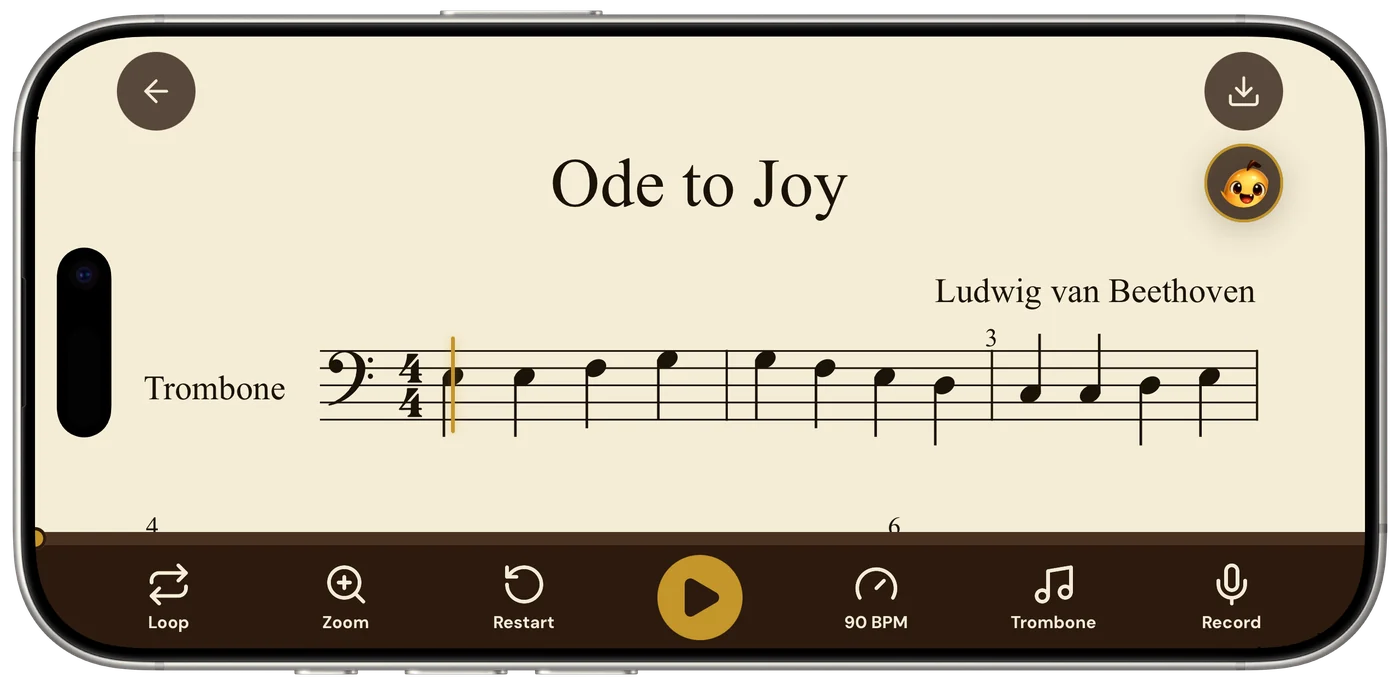
All of these steps are easier when you can hear what your part should sound like. That is the page Sheetly is for. Take a photo of the page with your iPhone or iPad, and Sheetly plays your part back on trombone, or on piano, at whatever tempo is comfortable. Loop bar 75 of the Beethoven while the triplets settle. Record a take against it. Ask the coach what the slide positions are in bars 21 to 24. The binder stays exactly as crumpled as it is.
Questions
Can Sheetly scan a whole band book?
Piece by piece, yes. Photograph each part you want to hear, two to four pages at a time, or import a multi-page PDF. Each piece becomes a score in your library that plays.
Does scanning work on photocopies?
Yes. Every page in this book is a photocopy in a ring binder, creases and shadows included, photographed with a phone. What matters is that the staff lines are visible and the light is even.
Do I need to take the pages out of the binder?
No. These were photographed in the binder with the rings in the shot. The scanner reads the music and ignores the rest.
What does Part 4 mean on a band part?
Some band arrangements are written in a small number of parts, each of which can be played by several kinds of instrument. Here, Part 4 is one of the lower lines, shared by trombone, baritone and bassoon, which is why those instrument names are printed under the part number.